State of Corporate Visual Content in India 2026
- Indian enterprises are spending more on visual content than ever, yet most of that spend is disconnected from actual business outcomes.
- Corporate event photography and brand films are no longer “nice to have” documentation. They are now primary assets in employer branding, investor communication, and PR pipelines.
- The MICE sector in India is projected to grow at a CAGR of 13% through 2030, yet a majority of companies still treat event photography as a line item afterthought rather than a content production strategy.
- AI tools are entering post-production workflows, but they cannot replace on-ground visual intelligence at high-stakes corporate events.
- The biggest shift in 2026 is not about technology. It is about accountability. CMOs and CEOs are now asking: what did we get out of that content?
If Your Last Corporate Event Produced No Reusable Visuals, You Just Burned the Budget Twice
Here is a scenario that plays out across Indian boardrooms every quarter.
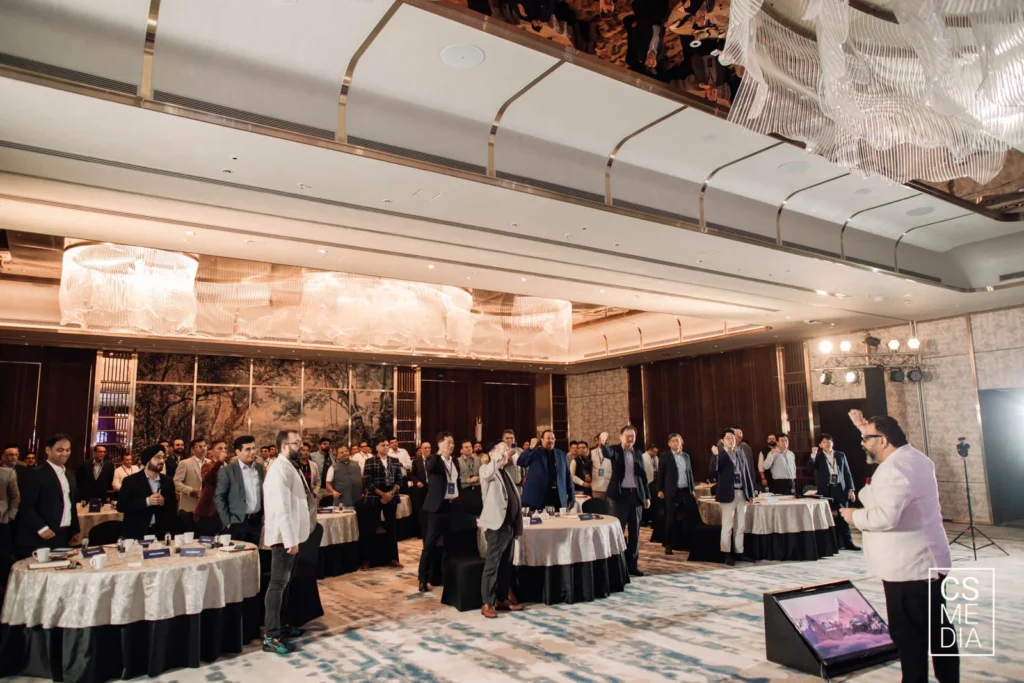
A pharma company spends upward of ₹80 lakhs hosting 400 distributors at a leadership offsite in Goa. The venue is premium. The keynote is polished. The gala dinner runs till midnight. And on Monday morning, the marketing team has 200 blurry photos from someone’s phone, a shaky hall video someone shot on an iPhone, and no usable content for the next six months of communication.
That is not a photography problem. That is a business strategy problem.
In 2026, the Indian corporate landscape is at an inflection point when it comes to corporate visual content. The events are bigger, the brands are more ambitious, and the digital channels demanding content are multiplying. But the gap between the quality of the events Indian companies are hosting and the quality of the visual assets they are walking away with has never been more visible.
This blog looks at that gap head on. What is the actual state of corporate visual content in India today? Where is the spend going? What is working? What is being wasted? And what does genuine visual content strategy look like for an Indian enterprise in 2026?
The Landscape: Corporate Visual Content in India - What the Numbers Actually Say
Before we get into the nuances, let us anchor this in what is actually happening at scale.
According to the India MICE Market report cited by the Ministry of Tourism, the India MICE market generated revenue of USD 49.4 billion in 2024 and is projected to reach USD 103.7 billion by 2030, registering a 13% CAGR. Delhi NCR, Mumbai, and Bengaluru account for the lion’s share of this activity, with Gurgaon consistently ranking among the top three cities for corporate event spend in the northern market. Every single one of those conferences, dealer meets, investor days, and annual functions generates a visual content requirement. Most of that requirement is being met poorly.
On the broader content side, India’s total advertising spend in FY2025 reached ₹1,11,000 crore – an 11% growth over FY2024 – with digital advertising now commanding 44% of the market at ₹49,000 crore, reflecting 20% year-on-year growth, according to the Ipsos India Advertising Expenditure report. A significant portion of that is content production. But here is what the aggregate number hides: corporate visual content strategy in India – meaning photography and videography for enterprise brands – is a very different from D2C content or influencer marketing. The production requirements, the stakeholder complexity, the regulatory constraints, and the intended shelf life of the asset are fundamentally different.
Let us break down the corporate visual content universe in India by category:
1. Corporate Event Photography and Videography
This covers annual conferences, leadership summits, product launches, dealer meets, channel partner events, government initiatives, CSR programmes, and trade expos. Volume is high across Delhi NCR, Mumbai, and Bengaluru. Quality is inconsistent everywhere.
2. Brand Films and Corporate Documentaries
These are produced for investor decks, annual reports, brand campaigns, government submissions, and internal communications. Budget range is wide. Strategic intent is often unclear.
3. Employer Branding Photography
Workspace shoots, culture documentation, employee testimonials, and recruitment content. This is the fastest-growing segment of corporate visual content strategy in India, driven by the talent war among Indian and multinational firms competing for mid to senior level professionals across Gurgaon, Mumbai, and Bengaluru’s corporate corridors.
4. MICE Videography
Incentive trips, international conference coverage, association congresses. This is where the ROI conversation is most advanced and where Indian companies are most behind in terms of asset utilisation.
5. Experiential and Trade Expo Coverage
Exhibition booth documentation, product demonstration videos, event BTS content. Critical for pharma, FMCG, auto, and tech sectors where booth presence is a major annual investment.

The Big Shift: Why Corporate Visual Content Strategy in India Has Changed Permanently
For the better part of the last decade, corporate photography and videography in India was treated as documentation. You hired someone, they showed up, they clicked. Done.
That era is functionally over for any company operating at scale.
Here is what has changed and why it matters to a CEO reading this blog:
Visual Content Is Now an Enterprise Communication Asset
Brand films India, employer branding photography, and MICE videography are no longer line-item afterthoughts sitting in a procurement folder. They are active instruments of business communication.
When Kedaara Capital hosts its annual limited partner meeting, the visual content produced from that event is not just a record of the day. It becomes part of the firm’s investor communication, a signal to the LP community about the quality and scale of the operation, and a recurring asset across their website, LinkedIn presence, and reporting. The same logic applies to a company like HealthQuad hosting an investor conference, or a government ministry documenting a flagship infrastructure initiative.
The question is no longer “did we cover the event?” The question is “what content library did we build from this event, and how does it serve our communication goals over the next 12 months?”
The Post-Event Funnel Is Where Money Is Being Left on the Table
Consider the lifecycle of a well-documented corporate event:
- Day of event: Real-time social content, live coverage assets, leadership headshots for press release
- Week 1 post-event: Highlight film for internal communication, LinkedIn content for leadership profiles, B-roll for corporate website
- Months 1 to 3: Conference recap content for thought leadership, testimonial cuts from keynote speakers, annual report photography
- Months 3 to 12: Evergreen employer branding content, sales deck visuals, investor communication imagery
Most Indian companies are currently capturing value only from the first stage. The rest is waste.
Who Is Getting This Right
A few categories of Indian organisations have moved further ahead on this:
Private equity and asset management firms understand the investor signal embedded in premium visual content. When a PE fund hosts a portfolio company CEO conference, every frame of that photography is communicating something about the fund’s brand to its LP base and to the broader ecosystem.
Large pharma and FMCG companies with significant trade event calendars have started treating their annual expo coverage as brand asset production. Dermacon, CPhI, CPHI India, and similar events now see serious visual content briefs from leading pharma brands who understand that booth photography and conference coverage feeds their medical affairs, sales, and marketing teams for months.
Government bodies and PSUs running major initiatives under programmes like Digital India, Skill India, and national infrastructure projects are increasingly demanding broadcast-quality visual documentation because these assets feed press, annual reports, parliamentary committee presentations, and international investor roadshows.
Where the gap remains most acute is in the mid-tier Indian corporate sector, specifically companies in the ₹500 crore to ₹5,000 crore revenue range that are hosting significant events but have not yet built a visual content production framework to match.
The Four Fault Lines in India's Corporate Visual Content Strategy
This is where the honest diagnosis gets uncomfortable.
Fault Line 1: Brief Quality Is Terrible
The average visual content brief that a corporate photography or videography agency receives in India contains the venue, the date, and the number of people expected. That is it.
There is no information about the intended content distribution channels. No understanding of which visual assets will go to the board versus which go on Instagram. No briefing on brand guidelines or visual tone. No list of priority moments that must not be missed.
The result is that even excellent photographers cannot produce strategically useful content because they have no strategy to photograph for. You cannot build a content library without a content architecture.
What it costs: A missed CEO keynote moment because the brief said “conference coverage” and the photographer was shooting networking at that time. A two-day annual conference documented with 3,000 generic photographs and zero usable brand film footage because nobody specified the highlight reel brief in advance.
Fault Line 2: Procurement Is Disconnected from Marketing
In most large Indian enterprises, the agency handling corporate event coverage is procured by the admin or facilities team. The marketing team often has no seat at the table until delivery day, and by then it is too late to redirect.
This is structurally different from how companies approach, say, their advertising agency or their PR firm, both of which are firmly owned by the marketing function. Visual content production sits in a grey zone between administration and marketing, and that grey zone is where quality goes to die.
At the G20 events hosted across India in 2023, the visual documentation infrastructure was extraordinary because the brief was treated as a national communication imperative, not a logistics task. The lesson for corporate India is direct.
Fault Line 3: The Vendor Ecosystem Is Wildly Inconsistent
The Indian market for corporate photography and videography is deeply fragmented. At one end you have seasoned professionals with broadcast-grade equipment, editorial backgrounds, and genuine understanding of corporate communication. At the other end you have freelancers who shoot weddings on weekends and “corporate events” for budget clients during the week.
The problem is that both categories often show up in the same RFP process with dramatically different pricing and no obvious signal to a non-specialist procurement officer about the quality difference.
Authentic storytelling compositions, consistent visual identity, and brand-aligned corporate event photography are the defining standards for 2026 – and they require a fundamentally different level of creative direction than event documentation. A photographer who does not understand corporate brand architecture cannot produce content that will serve an annual report, an investor roadshow, and a LinkedIn campaign simultaneously. These are different visual languages.
Fault Line 4: Asset Utilisation After Delivery Is Near Zero
This might be the most underappreciated problem in Indian corporate visual content strategy.
The brief gets written (however thin). The agency delivers the photographs and the video. The files go into a Google Drive folder. A few get used for the post-event social post. And then nothing.
The asset is dead.
No indexed media library. No internal distribution to sales teams who need visuals for pitches. No structured push to the communications team who needed exactly this content for an upcoming annual report. No workflow connecting the event coverage to the employer branding content calendar.
Industry practitioners across MICE, pharma, and financial services report this is the norm rather than the exception. The investment in content production is made. The content is produced. And then most of it quietly depreciates without being used.
What 2026 Is Actually Demanding: A Corporate Visual Content Strategy Framework for Indian Enterprises
If you are a CMO, Head of Communications, or CEO building a visual content strategy for your organisation this year, here is what the evidence points to.
Move to a Content Production Mindset, not a Coverage Mindset
The language shift matters. Coverage implies documentation. Production implies strategic intent.
When your team internally talks about “covering the event,” the output is photographs and a highlight video. When they talk about “producing content at the event,” the output is a content calendar’s worth of assets across multiple formats and multiple channels, all briefed and captured in a single production day.
The best-run corporate communication teams in India treat their leadership summits, annual conferences, and product launches the same way a media company treats a shoot day: brief, shot list, delivery by channel, rights management, and distribution plan.
Separate Your Tier-1 and Tier-2 Visual Moments
Not every event deserves the same level of investment. But every Tier-1 event needs to be treated as a major production:
Tier 1 events (board and leadership events, investor days, national product launches, international conferences, government flagship programmes): These require a full creative direction and production brief, multi-camera video setup, dedicated still photography with brand oversight, and a post-production plan that produces assets across at least four to five distinct channels.
Tier 2 events (regional sales meets, chapter-level dealer meets, internal townhalls, smaller trade expos): These need a streamlined brief and a clear set of deliverables. Even here, the brief should specify which three to four images will end up on LinkedIn and which BTS moment will feed Reels.
Build a Visual Content Brief Template
This is the single highest ROI action most Indian corporate teams can take this year. A two-page visual content brief template that gets filled out before every agency engagement should include:
- Primary stakeholders to be photographed with priority ranking
- Key brand moments that must be captured (keynote, product reveal, signing ceremony)
- Distribution channels with format specifications (website, print, LinkedIn, internal comms, investor deck)
- Visual tone references aligned with current brand guidelines
- B-roll requirements for video (location, signage, product, audience, speaker close-ups)
- Post-production deliverables with timeline
Investing two hours in this brief before a major event can save you from spending three weeks after the event trying to extract usable content from assets that were not shot for your actual needs.
Rethink the Vendor Selection Process
The criteria that matter for premium corporate visual content are different from what a standard procurement checklist captures:
- Editorial storytelling ability: Can this photographer produce images that could run in a business newspaper? That is the standard.
- Corporate brand literacy: Have they worked with brands in your sector? Do they understand the visual grammar of your industry?
- Post-production capability: Is editing, color grading, and asset management part of the service or is that an afterthought?
- Confidentiality and professionalism: For PE firms operating out of Mumbai and Gurgaon, financial institutions, government bodies, and Fortune 500 corporate events in Delhi NCR, discretion is non-negotiable. This needs to be contractually embedded.
- Multi-format delivery capability: In 2026, a single production day needs to yield horizontal photographs, vertical social cuts, 16:9 highlight films, and square format assets. Can your agency produce all of these, or only one?
The AI Question: What It Changes for Corporate Videography in India - and What It Doesn't
AI tools are now used across the production pipeline for script drafts, automated logging, smart editing, auto-subtitling, color grading presents, and personalised video variants for different audiences. This speeds turnaround and lowers costs across corporate videography in India, while enabling hyper-targeted messaging for different stakeholder groups.
AI is genuinely transforming post-production. Turnaround times for highlight edits, multi-format cuts, and colour-graded delivery are compressing. This is real and it is useful.
What AI cannot do at a corporate event:
- Read the room when a CHRO makes an unscripted remark that becomes the most shareable moment of the day
- Know that the brief says “no photos of the legal team” without being told
- Understand that the CFO who sat in the back corner is actually the one who needs the most coverage because she is meeting the board next week
- Capture the authentic candid moment in a leadership dinner that makes the photograph worth using in an annual report
AI-generated content is flooding every channel – and that is precisely what makes human-directed, on-ground visual intelligence at high-stakes corporate events more valuable, not less.
The companies that understand this are investing more in the quality of their on-ground visual production because that is the only content category that cannot be replicated at scale.
What the Evidence Tells Us About Corporate Visual Content ROI in India
Let us be specific about where visual content generates measurable returns for Indian enterprises.
Employer branding: Companies with documented, high-quality visual assets from their workplace and culture programme consistently report faster hiring cycles and better candidate quality scores. This is particularly acute for Indian IT services, pharma, and financial services firms competing for mid-management talent.
Investor communication: For PE-backed companies, family offices, and listed entities, the quality of visual content in annual reports, roadshow decks, and LP communication has a direct correlation with perceived management quality. Investors make subconscious quality assessments from visual signals before the financials are even opened.
Post-event PR: Press coverage of corporate events is significantly higher when the brand provides high-quality, editorial-grade photography to journalists. Most Indian companies send press releases with no usable images or with low-resolution thumbnails that journalists cannot print.
LinkedIn thought leadership: For CEOs and senior leaders, LinkedIn has become the primary executive communication channel in India’s corporate ecosystem. The engagement differential between a well-shot, professionally edited speaker photograph from an event and a blurry phone grab from the same stage is not subtle. It signals everything about how seriously the person takes their professional brand.
Trade expo ROI: Companies exhibiting at events like Automechanika India, the India International Trade Fair in Delhi, or sector-specific pharma and FMCG expos in Mumbai and Gurgaon spend significant money on booth design and execution. The booth exists for three to five days. The photography and videography from that booth, if done correctly, extends that investment across 12 months of sales and marketing content.
The Government and Public Sector: The Most Underserved Brief in India's Corporate Visual Content Market
This is a category that does not get discussed enough in the Indian corporate photography conversation.
Government ministries, state departments, PSUs, and defence organisations are running some of the most significant events in India today. From national-scale technology summits to international diplomatic gatherings to flagship welfare programme documentation, the visual content strategy requirement is enormous – spanning brand films, corporate event photography, and full-scale MICE videography – and the institutional capacity to manage it is often thin.
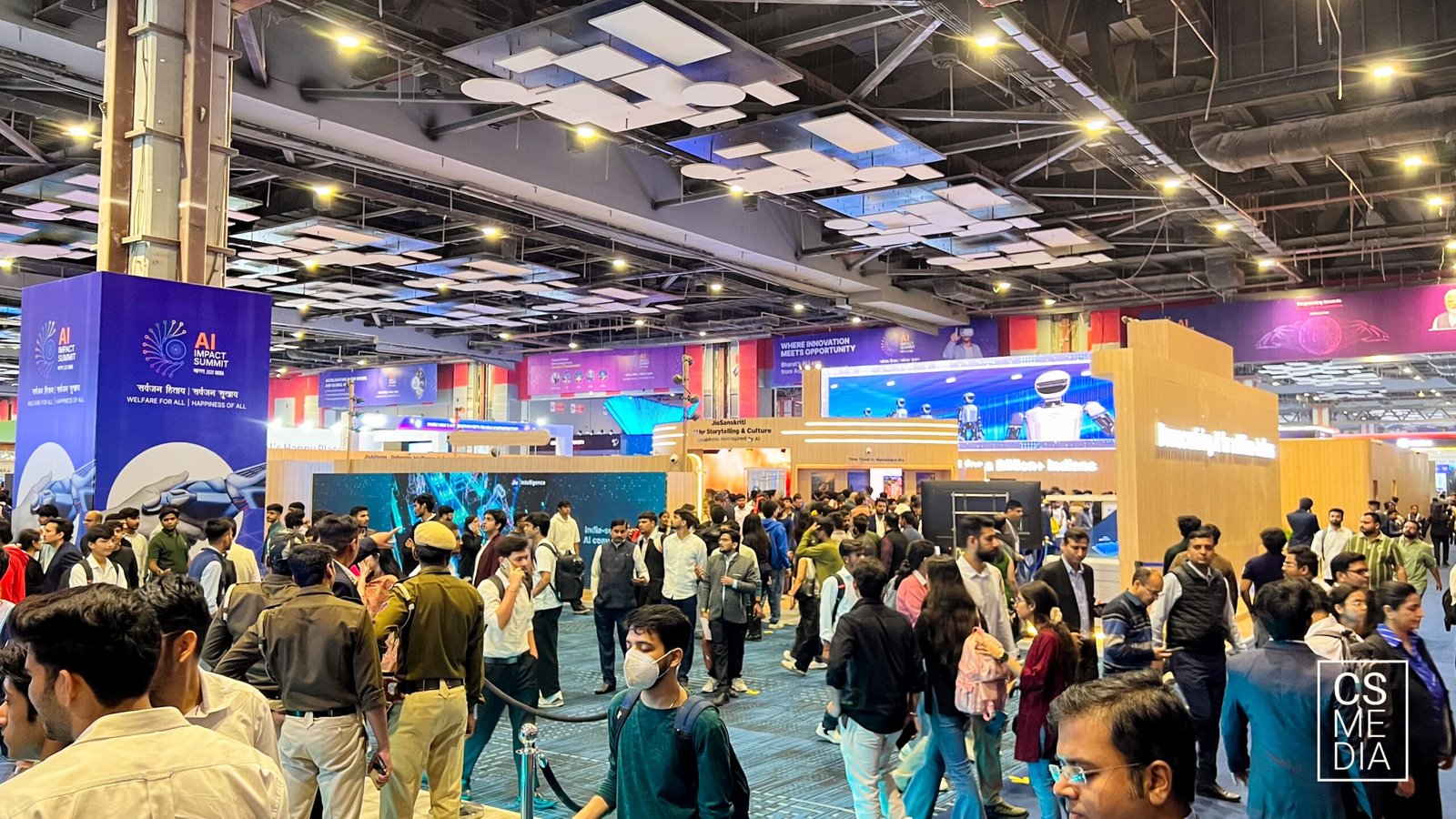
The India AI Impact Summit, events hosted by NITI Aayog, state government investor summits like Vibrant Gujarat, and defence procurement events all have significant visual content production needs. The briefs are often more complex than a corporate client because the stakeholder map is wider and the distribution channels include parliamentary records, international press, and archival documentation alongside digital media.
Increasingly, government bodies at the national and state level are becoming more sophisticated buyers of visual content services. The professionalisation of communication functions in Indian government, driven in part by the global visibility aspirations of the current administration, is creating a genuine high-value market for corporate-grade photography and videography.
Looking Ahead: The Three Defining Trends for Corporate Visual Content in India Through 2027
1. The Content Production Day Becomes Standard
The shift from “event coverage” to “content production day” will become a standard operating procedure for Tier-1 enterprise communications teams in India within the next two years. Companies will begin allocating content production budgets the same way they allocate advertising budgets: with a clear output specification, a distribution plan, and a measurement framework.
2. Visual Content Moves Into Corporate Governance Reporting
With ESG reporting, BRSR requirements, and increasing shareholder scrutiny of corporate governance, the visual documentation of CSR programmes, board events, sustainability initiatives, and stakeholder engagement is moving from optional to essential. Companies that do not have archival quality visual records of their governance activities will face increasing pressure from audit and compliance functions.
3. Multi-Format Production Becomes Non-Negotiable
The idea that a corporate event produces one kind of asset (photographs for the website) is gone. Every major production in 2026 and beyond needs to yield a minimum of six to eight distinct formats: horizontal photographs, vertical photographs for print, short-form vertical video for LinkedIn and Instagram, a 90-second to 3-minute highlight reel, speaker close-up footage for individual leader profiles, wide-angle establishing shots for editorial use, and candid documentation for employer branding. Any agency that cannot deliver this from a single shoot day is structurally behind.
Summary: The Honest State of Corporate Visual Content in India
India’s corporate visual content ecosystem is growing fast and executing inconsistently.
The events are getting bigger. The brand ambitions are getting more sophisticated. The digital channels demanding content are multiplying. And the gap between the events being produced and the content assets being extracted from those events is costing Indian enterprises in ways that do not always show up in a single line item but add up considerably over a fiscal year.
The organisations leading the shift are those that have moved from treating visual content as a service to treating it as a strategic communication investment. Private equity firms briefing photographers the way they brief PR agencies. Pharma brands building multi-channel content strategies around their annual conference calendar. Government bodies treating flagship event documentation as institutional communication infrastructure.
The organisations being left behind are those still running visual content production on the procurement equivalent of an afterthought.
The good news is that the course correction is not complicated. It starts with a better brief, a more informed vendor selection process, and a clear answer to one question before every major production: what does this content need to do for us, and for how long?
The rest follows from there. And for any organisation serious about building a lasting presence – across Delhi NCR, Mumbai, or any major Indian market – getting corporate visual content strategy right is no longer optional. It is the infrastructure on which everything else is built.
Work With India's Trusted Corporate Visual Content Partner
CandidShutters Media has spent over 14 years building visual content for India’s most demanding organisations, from Fortune 500 multinationals and private equity firms to government institutions and global tech brands. Our work spans corporate event photography, MICE documentation, brand films, employer branding photography, and corporate documentaries.
If you are planning a leadership summit, investor conference, trade expo, product launch, or any high-stakes corporate event in India and need a production partner who understands what a CEO needs to walk away with, not just what a brief specifies, we would like to talk.
Get in touch with the CandidShutters Media team to discuss your next production.
Last updated on April 10th, 2026 at 08:10 pm

CandidShutters Media
Corporate Photography & Video Production Agency · Mumbai & Gurgaon · Est. 2012 · 14+ Years
International : Dubai · Sri Lanka · Malaysia · Thailand · Maldives · Worldwide