How to Photograph CSR Initiatives Without Looking Performative
When your CSR spend runs into crores and your sustainability report sits in front of institutional investors and board committees, your photography brief needs to match that accountability. This blog covers how to photograph CSR initiatives in a way that holds up to BRSR disclosure scrutiny, ESG rating agency review, and genuine public stakeholder trust, not just how to produce images that look good in the annual report.
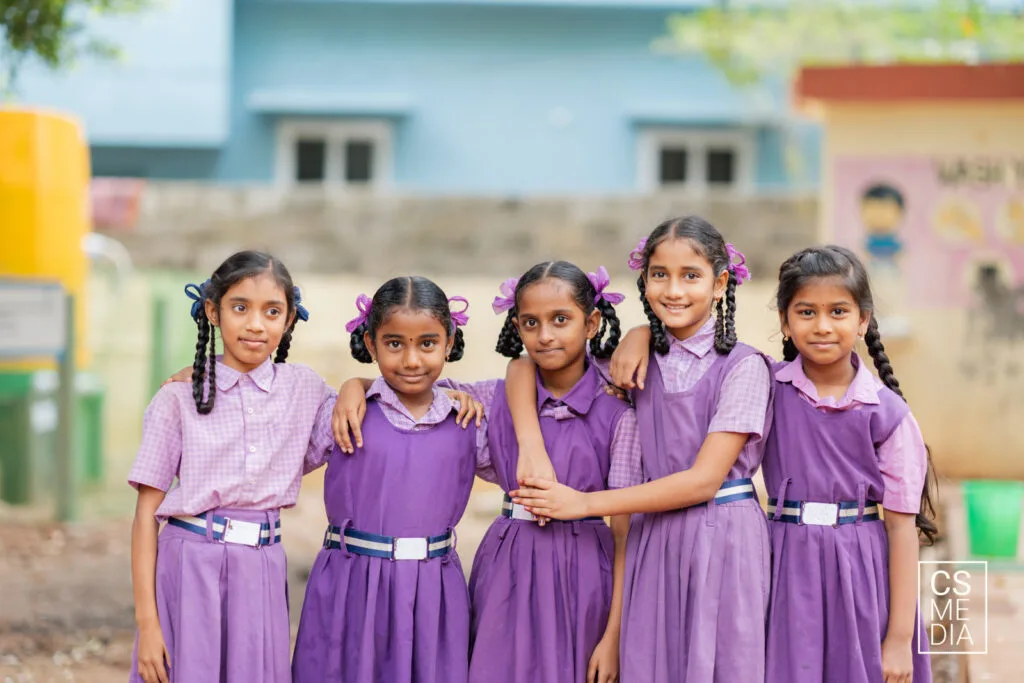
There is a particular kind of photograph that appears in the sustainability section of Indian corporate annual reports with remarkable consistency.
A senior executive stands at the front of a group in a village or a school. Everyone is arranged with some care. The executive is the visual subject. The community members who are the actual purpose of the programme occupy the perimeter of the frame. The caption reads something like: “[Company Name] reaches 50,000 beneficiaries under its flagship initiative.”
The photograph and the caption are in total contradiction with each other. The caption claims scale. The image shows a single visit. The caption claims beneficiary impact. The image shows executive presence.
A board member, an institutional investor applying an ESG screen, or a Ministry of Corporate Affairs reviewer reading the BRSR disclosure can feel that contradiction even if they cannot articulate it precisely. And in 2026, that feeling has consequences for ESG ratings, for investor confidence, and for the long-term credibility of programmes that are in many cases genuinely doing important work.
This is the defining failure in how most Indian corporates photograph CSR initiatives. The programmes are real. The investments are substantial. The impact is genuine. But the visual documentation still looks like it was designed to signal effort rather than demonstrate it.
This blog is about how to fix that specifically, practically and at the scale where it matters most.
If you are looking for a foundational understanding of what CSR visual documentation is and why it matters strategically, that is covered in our complete guide: What Is a CSR Film and Why It Matters in 2026. This blog picks up at the operational level specifically the photography brief, the production standards and the documentation architecture that make CSR initiatives photography credible rather than performative.
What Has Changed and Why It Matters Now
India’s CSR mandate under Section 135 of the Companies Act has evolved significantly since it became law in 2013. The companies operating at the scale where this blog is relevant for those with a net worth above ₹500 crore, annual turnover above ₹1,000 crore, or net profit above ₹5 crore and are now subject to requirements that go well beyond spending the mandated 2%.
The MCA made BRSR mandatory for the top 1,000 listed companies by market capitalisation from FY 2022–23. BRSR Core requiring third-party assurance on nine key ESG metrics became applicable to the top 150 listed companies from FY 2023–24 and is progressively expanding to the top 1,000 by FY 2026–27. Board CSR committees require independent assurance of programme outcomes. Institutional investors with ESG mandates particularly foreign portfolio investors and large domestic funds are applying increasingly rigorous visual and narrative scrutiny to sustainability communications.
In this environment, CSR documentation photography is no longer optional supporting material. It is part of the evidentiary record.
The photography has to hold up at every point in the chain from programme field to board committee to institutional investor to ESG rating agency.
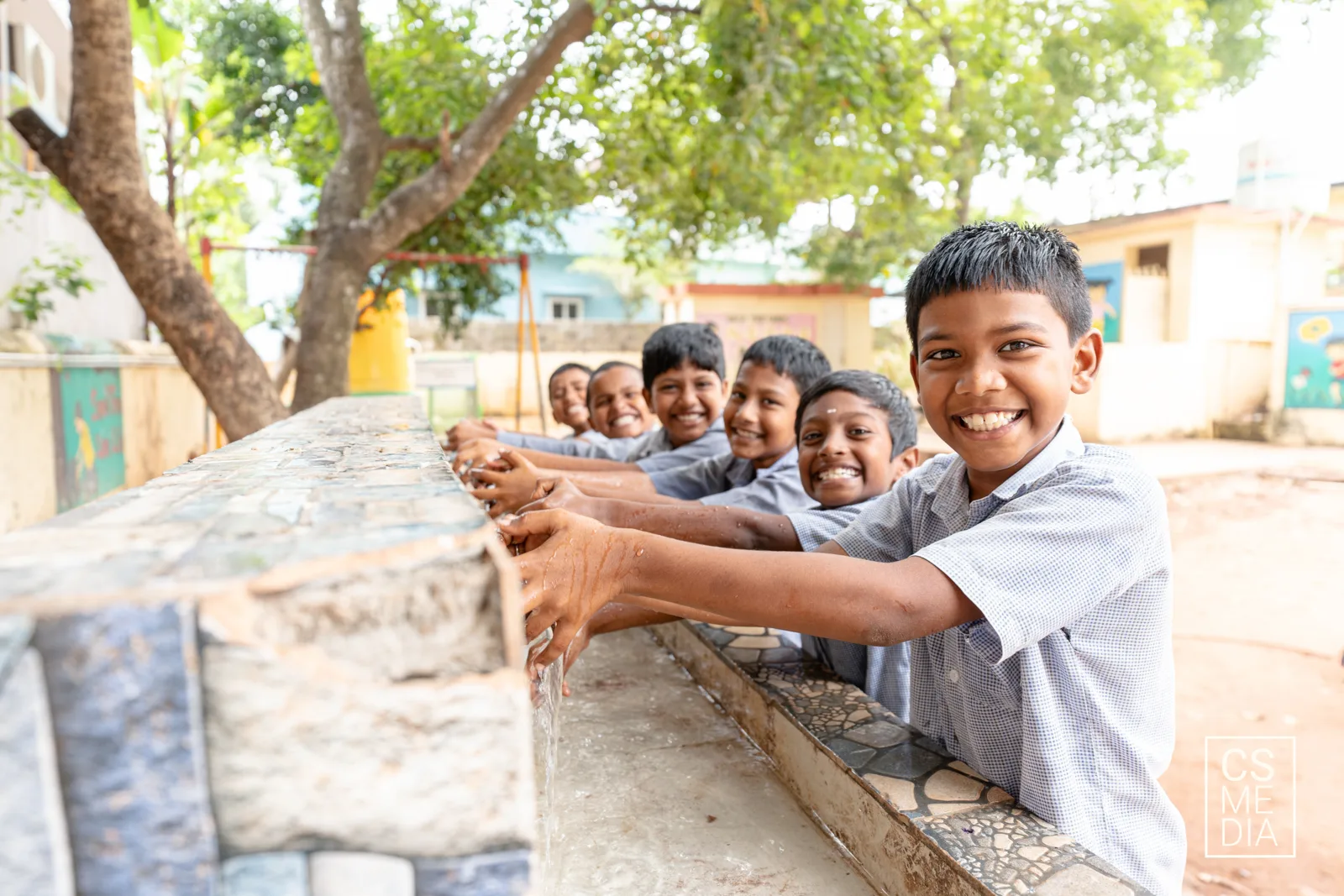
The Specific Ways Large-Scale CSR initiative Photography Goes Wrong
At the level of programmes this blog is addressing, the failures are structural, not just aesthetic.
Treating a multi-geography programme as a single-location shoot A programme operating across five states cannot be visually represented by one visit to one location. But that is often what happens because CSR initiatives photography is budgeted as a one-day line item rather than as a documentation function. The result is imagery that cannot carry the weight of a programme that claims national or regional scale.
Commissioning photography at the wrong stage The most compelling social impact photography documents programmes in progress and at outcome and not at inception. Foundation-laying ceremonies and memorandum-of-understanding signings are easy to photograph but they tell a stakeholder nothing about what the programme actually accomplished. Organisations that get this right commission documentation across the full programme timeline.
Using the same visual approach for regulatory and communications purposes BRSR photography requires verifiable, factual documentation that can withstand regulatory review. Communications photography for the sustainability report narrative, the investor deck, or digital channels requires imagery that tells a story of change. Conflating the two produces material that serves neither function properly.
Allowing executive visibility to dominate the visual brief Sophisticated ESG audiences read executive-dominant CSR photography as evidence of a culture where CSR is a leadership optics exercise rather than an embedded organisational commitment. The executive can be in the frame. The executive should not be the frame.
Producing photography only for print The sustainability report used to be the only output. It is now one of several alongside BRSR disclosure, ESG rating agency questionnaire responses, investor presentations, MCA submissions, and digital and social channels. Photography produced only with a print layout in mind will not serve any of those other functions well.
How to Photograph CSR Initiatives : The Standards That Actually Hold Up
Brief at the Programme Level, Not the Event Level
The organisations running CSR programmes at scale that generate credible visual documentation all share one approach: the photography brief is written at the programme design stage, not the week before an event.
When a CSR team is documenting a programme that covers hundreds of villages across multiple geographies, the visual documentation plan should map to the programme’s own measurement framework. What does success look like at 12 months? At 24 months? What does the environment look like before the programme enters a community versus after? What does behavioural change look like when it is visible in a photograph?
These questions cannot be answered in a photography brief written the afternoon before a field visit. They require the communications and sustainability team to sit with the programme design and identify the visual evidence of the programme’s theory of change.
The practical implication: brief your photography agency with your programme’s impact framework, not just the event schedule.
Separate the Four Functions of CSR Documentation Photography
At large programme scale, CSR initiatives photography serves four distinct functions that require different approaches:
Regulatory documentation Photography that serves BRSR disclosure, CSR-2 filing, and MCA submissions. Needs to be factually verifiable, date-stamped, location-tagged, and activity-specific. This is evidence photography, not communications photography.
Sustainability report narrative Photography that tells the story of the programme’s impact for the annual report’s sustainability section. Needs to communicate human outcomes, scale, and change over time. This is authentic CSR photography with a clear editorial brief.
Investor and ESG rating agency communication Photography accompanying ESG questionnaire responses, investor presentations, and rating agency disclosures. Needs to demonstrate systemic impact and organisational commitment, not just programme activity. The audience here is sophisticated and will notice the difference between genuine documentation and produced imagery.
Internal and external stakeholder communication Photography for employee communication, government stakeholder briefings, civil society partnerships, and digital channels. Different audiences with different needs, requiring different frames from the same programme documentation.
Treating all four as a single requirement produces material that serves none of them well. The most efficient approach is a single field documentation programme that covers all four functions with a production architecture built at the brief stage to deliver distinct output sets from the same shoot.
Document Scale Through Geographic and Quantitative Anchoring
A programme covering 200 villages cannot be made to look like it covers 200 villages in a single photograph. But it can be made credible through a documentation approach that builds geographic and quantitative anchoring across a body of work.
This means photographs from multiple programme sites that visually demonstrate geographic spread. It means imagery incorporating environmental markers specific to different regions, not generic community photography that could have been taken anywhere. It means documentation of infrastructure, systems, or behaviour change that is quantifiably visible: classrooms furnished under the programme, health camps with attendance registers visible, water infrastructure with beneficiary data in frame.
This is the difference between a sustainability report that claims “our programme reached 5 lakh beneficiaries” and one where the sustainability photography gives that claim visual credibility.
Commission Documentary Sequences, Not Single Visits
The most credible CSR documentation photography follows a programme across time and shows change, not just activity.
The credibility of that kind of documentation comes from temporal depth, not production quality. A body of work that shows the same community or landscape at baseline, mid-programme, and outcome tells a fundamentally different story from a set of photographs taken at a single event.
For a multi-year programme, a documentation plan should include baseline photography before the programme enters a new geography, mid-programme documentation showing activities in genuine progress, and outcome photography showing the measurable change the programme has produced.
This is a fundamentally different approach from commissioning a shoot for the annual event. It requires a corporate CSR photographer who understands the programme well enough to know what to look for at each stage.
Handle Executive Visibility With Strategic Precision
This is the area where large-cap Indian corporate CSR photography most consistently undermines itself.
Executive presence in CSR photography works when the executive is photographed engaging with what the programme actually does, not just attending it. When the executive’s presence is one of several frames in a larger body of work. When the scale and context of the programme is visually established before the executive appears in the sequence.
Executive presence undermines credibility when the executive is the compositional centre of every significant frame. When community members or programme beneficiaries are visually subordinated to the leadership presence. When the photography reads as organised for the executive’s visit rather than for the programme’s documentation.
At the board level and the institutional investor level, this distinction is increasingly well understood. ESG frameworks that rating agencies apply include qualitative assessments of leadership commitment and imagery that looks produced for optics rather than documentation actively works against those assessments.
Apply Dignity-First Photography Standards Throughout
Dignity-first photography means that every production decision — how participants are approached, how they are framed, how they are represented in the final edit prioritises the agency and dignity of the people in the frame over the visual needs of the organisation commissioning the documentation.
This matters ethically because organisations have a responsibility to the communities they work with. It matters practically because audiences can immediately identify imagery that treats its subjects as props for corporate storytelling rather than as people. And it matters legally for programmes involving minors, tribal populations, or vulnerable communities where informed consent and representation standards carry specific legal obligations.
Informed consent is non-negotiable. Every participant must understand what they are participating in, where the images will be used, and who will see them.
The Brief That Actually Produces Usable Work
A CSR documentation photography brief for a large-scale programme should contain the following:
Programme overview What is the programme, what is its theory of change, where does it operate, and what does it claim to achieve?
Impact framework What are the programme’s key performance indicators? What does success look like in measurable terms? The photographer needs this to know what to look for in the field.
Documentation timeline Where is this shoot in the programme lifecycle baseline, mid-programme, or outcome? What has been documented previously and what continuity is required?
Output mapping Which of the four documentation functions does this shoot primarily serve? What will the images be used for, and who is the primary audience for each output?
Geographic and community context What is specific to this location that should be visible in the documentation? What markers of the programme’s presence in this community should appear in the frame?
Executive and stakeholder participation If senior leadership or government counterparts will be present, what is the intended communication function of their presence? What is the appropriate share of the documentation that should feature them?
Dignity and consent protocols What are the organisation’s protocols for image consent and representation? This applies to all community and beneficiary photography and is both an ethical requirement and, in many contexts, a legal one.
What This Looks Like in CandidShutters Media's CSR Photography Work
CandidShutters Media’s CSR photography portfolio spans education access programmes, skill development initiatives, women’s livelihood documentation, community infrastructure projects, and environmental responsibility programmes across urban, peri-urban, and rural geographies.
The consistent production standard across all of it is the same: small crew, unobtrusive equipment, real environments, and documentation structured around the programme’s own impact logic rather than around event schedules or executive diaries.
Our CSR photography work is documented at candidshutters.media/corporate-csr-photographer-social-impact – including on-ground documentation from school digital literacy programmes, rural skill training workshops, women’s livelihood initiatives, and community health access projects.
For organisations where the documentation requirement extends beyond photography into documentary film, our CSR and social impact film work is covered at our CSR Films service page and in our guide to social impact video production as a strategic business asset.
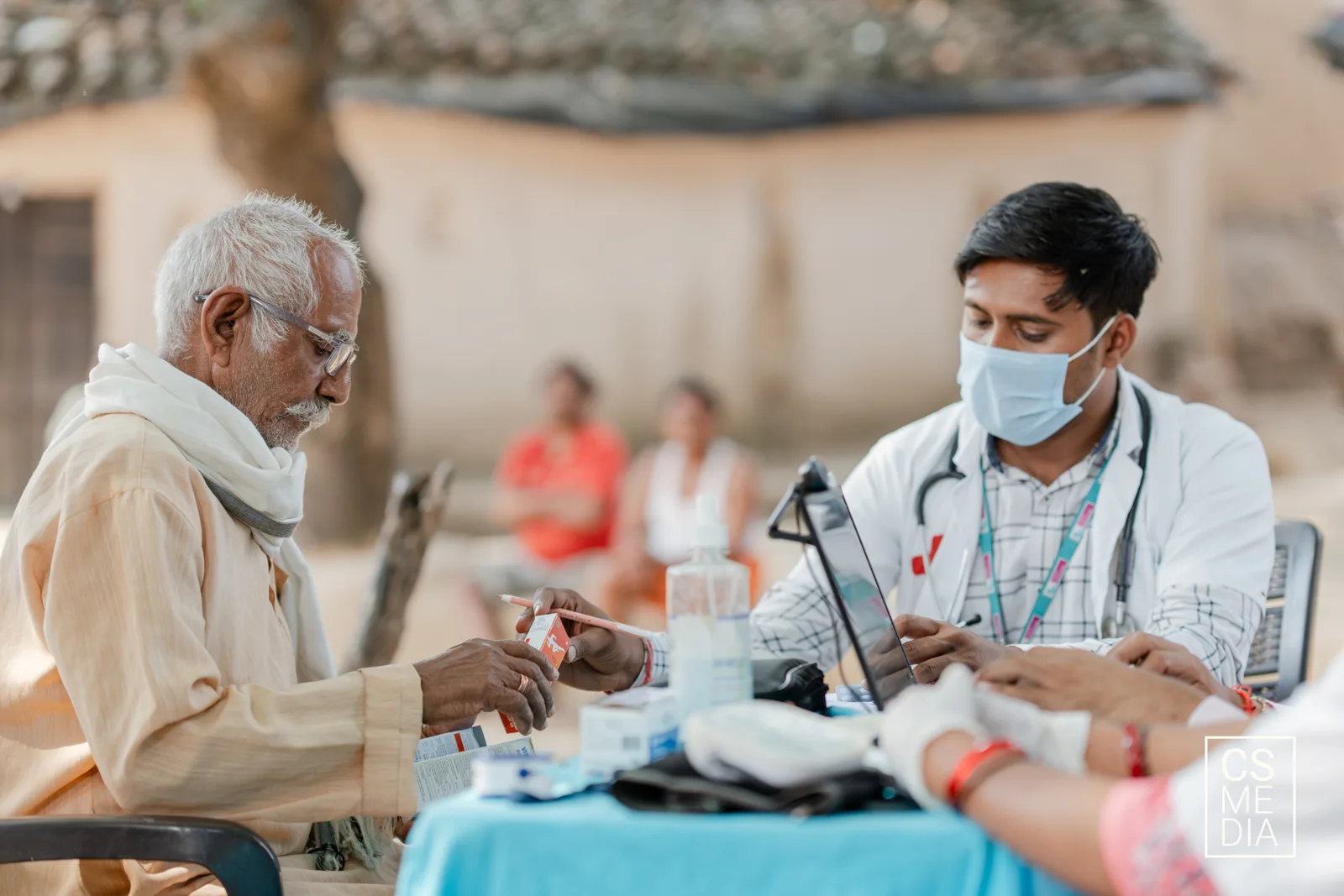
Five Things the Organisations Getting This Right Do Differently
1. They write the photography brief at the programme design stage with reference to the programme’s impact framework, not the event calendar.
2. They commission documentation across the programme timeline baseline, mid-programme and outcome, not at a single event.
3. They separate the four documentation functions and brief specifically for each output set from the same shoot.
4. They build geographic and quantitative anchoring into the visual body of work so that scale claims are visually credible, not just numerically stated.
5. They treat executive presence as one element of a larger documentation story and not as the primary visual subject of the programme’s record.
If your annual CSR spend is in the crores and your photography budget is still being managed as a one-day line item, the gap between those two numbers is costing you credibility with exactly the audiences that matter most.
Related Reading
- What Is a CSR Film and Why It Matters in 2026 – The complete foundational guide to CSR visual documentation
- Community Impact Photography Guidelines for NGO and CSR Teams – Ground-level photography standards for field documentation
- Social Impact Video Production as a Strategic Business Asset – Building an ongoing documentation system beyond single shoots
- ESG Visual Content Strategy for Indian Listed Companies – BRSR compliance and ESG communication strategy
- Impact of Video on CSR Branding: Why Trust Converts in 2026 – Why visual documentation builds stakeholder trust more effectively than written reports
Work With a CSR Photography Partner Who Understands the Brief
CSR documentation photography at enterprise scale is a governance function as much as a communications one. The brief, the production standard, and the output architecture need to reflect that.
CandidShutters Media works with communications and sustainability teams at large-cap and mid-cap Indian companies to build CSR photography documentation that holds up to BRSR disclosure requirements, ESG investor scrutiny, and the genuine accountability that serious programmes deserve.
Last updated on May 30th, 2026 at 11:56 am

CandidShutters Media
Corporate Photography & Video Production Agency · Mumbai & Gurgaon · Est. 2012 · 14+ Years
International : Dubai · Sri Lanka · Malaysia · Thailand · Maldives · Worldwide