CandidShutters Media

How to Film a Trade Show Stall That Signals Authority, Not Mere Presence

March 3, 2026 • Vaishali Sahu
how to film a trade show stall 2

How to film a trade show stall: reframing the question

How to film a trade show stall is often approached as an executional task. Cameras are arranged, footage is captured, and a recap is produced. For senior leadership, this framing is incomplete.

A trade show stall is not a temporary installation. It is a condensed expression of brand posture, a space where relevance, seriousness, and market confidence are evaluated in minutes. The way this environment is documented determines whether its value ends with the event or continues to compound long after.

The distinction lies in intent. Recording preserves memory. Strategic filming builds perception.

Understanding what a trade show stall represents

At scale, a trade show stall functions as a micro-marketplace. Buyers, partners, competitors, and stakeholders converge in a compressed environment where attention is scarce and judgment is swift.

From a leadership lens, the stall serves three critical functions:

  • Market Signaling – Communicating presence, momentum, and competitive standing
  • Trust Compression – Accelerating credibility through direct human interaction
  • Contextual Comparison – Being evaluated not in isolation, but relative to peers

Filming is the only mechanism that allows these signals to extend beyond the venue. Without it, the strategic value remains localized and transient.

The authority-driven documentary approach

High-performing brands increasingly adopt a documentary-led visual language when filming trade show environments. The objective is not promotion, but validation through observation.

This approach emphasizes:

  • Real interaction over narration
  • Environment over scripting
  • Subtlety over assertion

Authority is not claimed. It is demonstrated.

Visual decisions that carry weight

  • Controlled depth of field directs attention and conveys visual discipline
  • Stabilized motion creates calm within chaos, signalling operational control
  • Intentional framing removes noise and reinforces focus

These are not aesthetic indulgences. They are cues that senior audiences interpret instinctively.

What to capture: evidence, not excess

Every frame should serve a single purpose: substantiating relevance.

Establishing activity and momentum
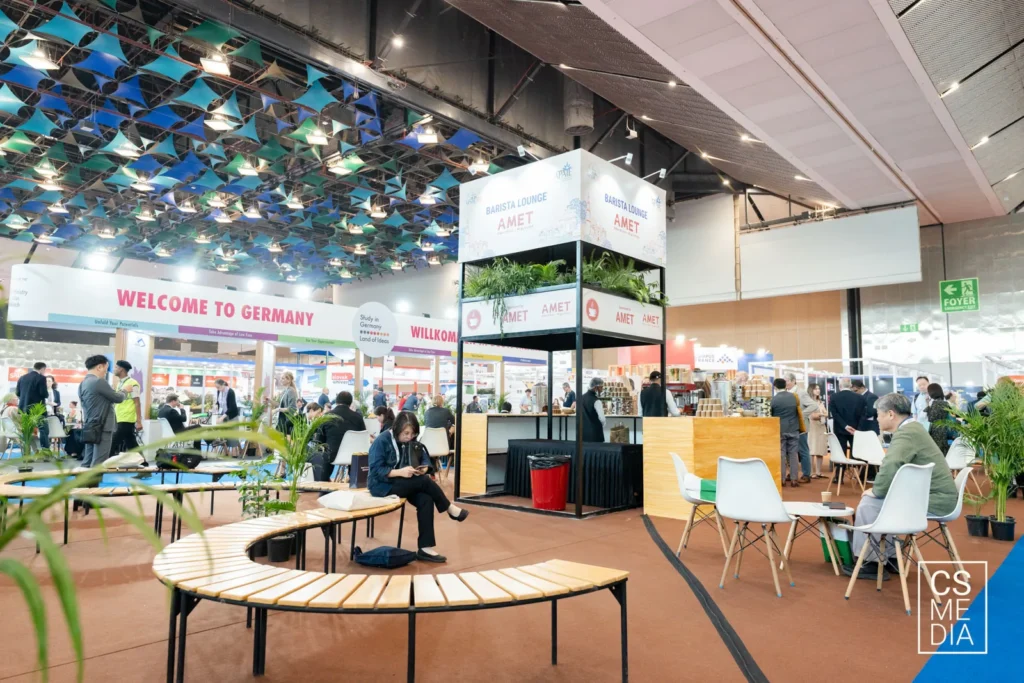
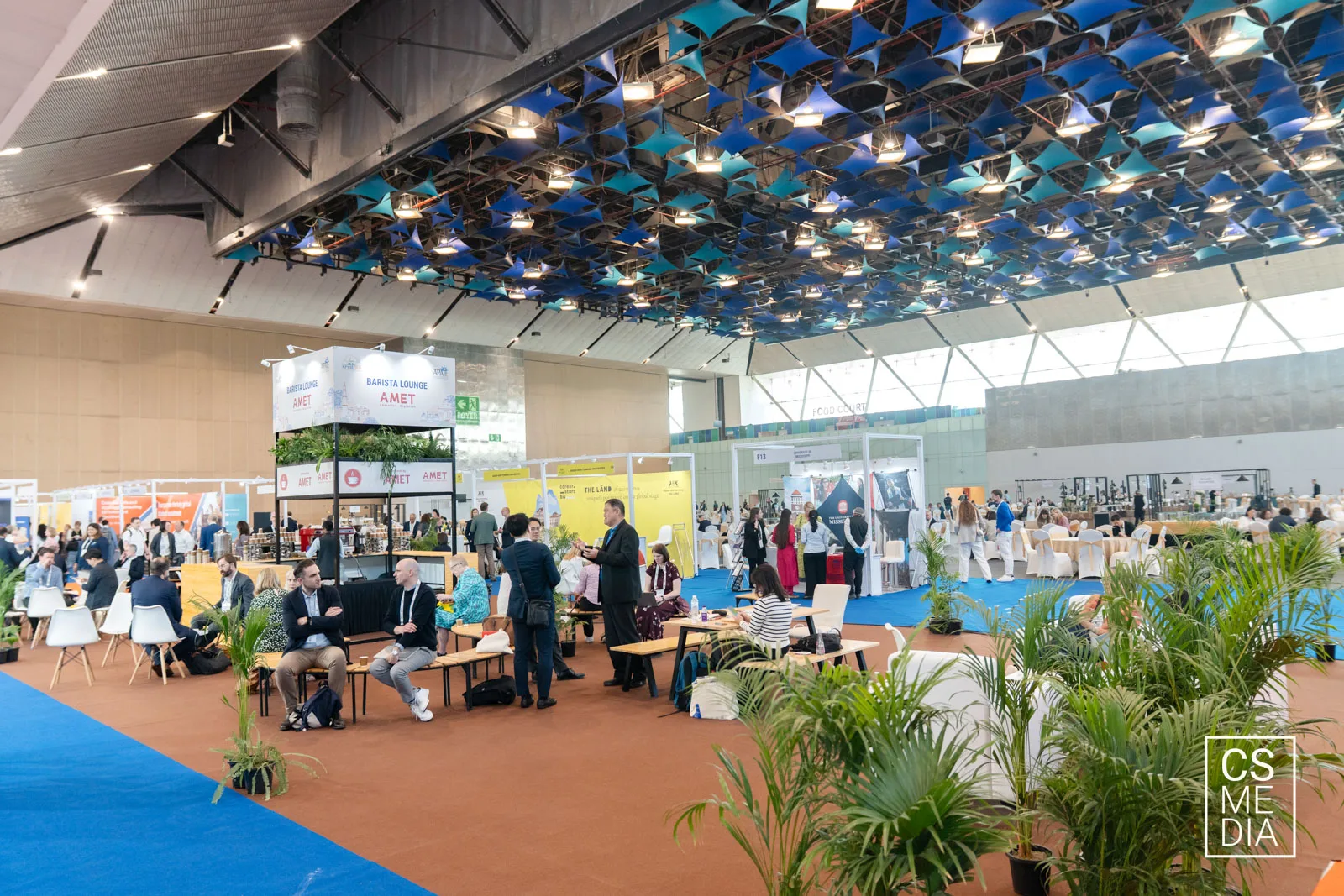
Wide-angle perspectives of an active stall are not decorative. They function as social validation, demonstrating interest, engagement, and market traction.

For stakeholders who were not present, this visual evidence often carries more weight than any written claim.

Human interaction as credibility
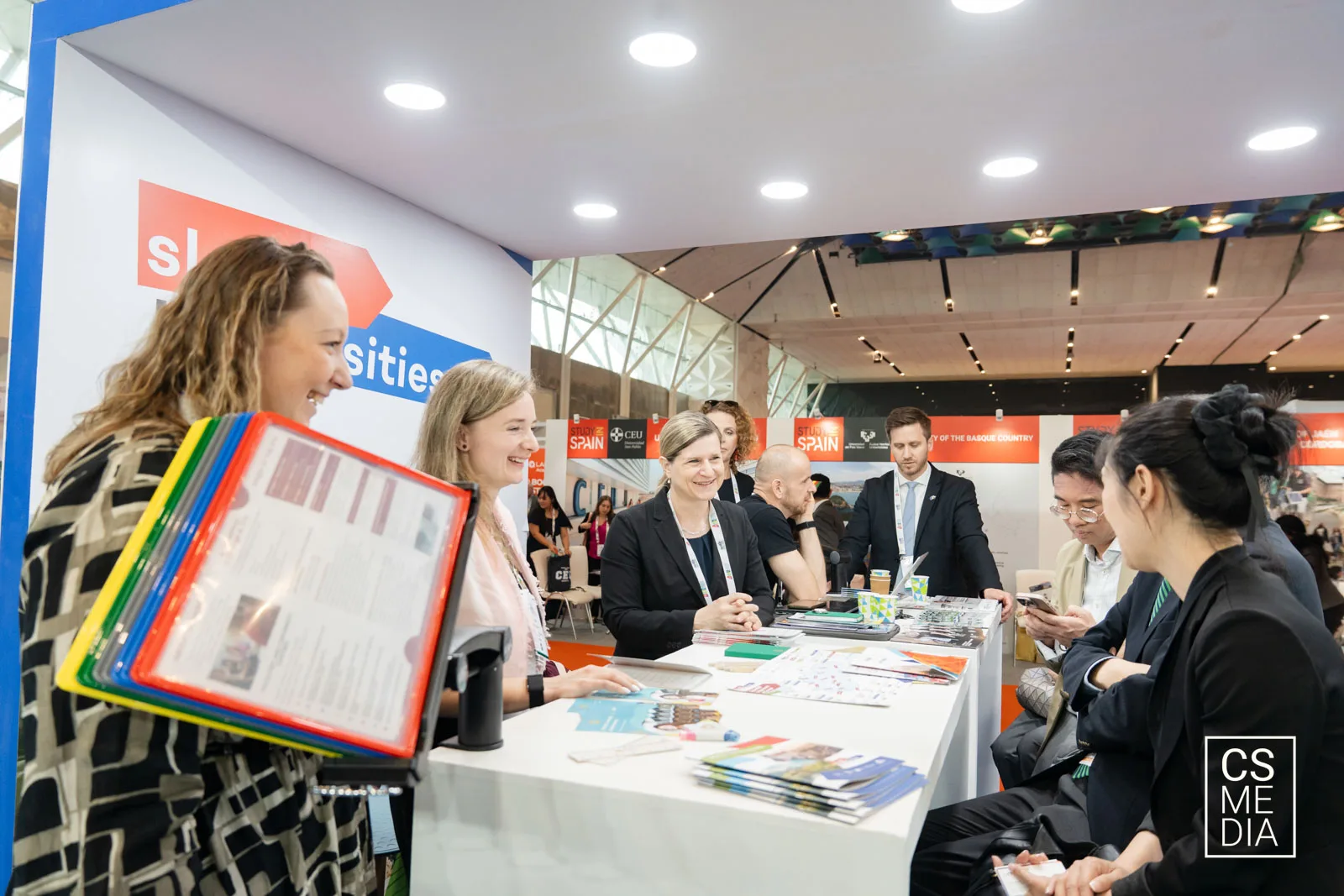
Unscripted exchanges – product explanations, discussions, gestures – build trust without performance. These moments communicate confidence organically and reduce perceived risk for future engagement.

Product-level detail
Close visual attention to products, interfaces, and material quality conveys seriousness. In complex or high-value offerings, these details often precede technical evaluation in shaping perception.

Behind-the-scenes: a signal of operational maturity

Behind-the-scenes footage is frequently underestimated. In reality, it reflects process integrity.

Moments such as setup timelines, internal coordination, and pre-opening preparation subtly communicate:

  • Readiness
  • Alignment
  • Execution discipline

For investors, partners, and senior buyers, these cues matter.

Perspective, scale, and restraint

When permitted, elevated or high-angle perspectives provide spatial context and scale, positioning the stall within the broader ecosystem of the event.

However, such perspectives must be approached responsibly. Indoor aerial capture carries regulatory, safety, and liability considerations. In many venues, alternatives that simulate height and scale achieve the same narrative outcome without exposure.

The objective remains clarity, not spectacle.

What to exclude, and why exclusion is strategic

Discernment defines professionalism.

Certain elements weaken authority and should be deliberately avoided:

  • Low-traffic moments that imply limited engagement
  • Adjacent competitor branding that creates legal or reputational exposure
  • Sensitive information that introduces compliance risk
  • Unguarded human moments that dilute brand perception
  • Improperly licensed music that undermines governance standards

What is omitted often communicates as much as what is shown.

Music, licensing, and executive responsibility

Audio choices are not creative afterthoughts. They are legal and reputational considerations.

Commercial content demands licensing clarity. Improper usage exposes organizations to takedowns, disputes, and credibility erosion – risks that are avoidable with informed decision-making.

Sound, when used, should reinforce tone without introducing vulnerability.

Equipment as a signal of intent

Equipment selection is not about excess. It is about consistency and risk mitigation.

Trade show environments demand tools that perform under:

  • Challenging lighting conditions
  • High ambient noise
  • Continuous movement

The outcome should be predictability and control, not improvisation.

Beyond the stall: contextual storytelling

Authority is contextual. Filming should extend beyond the immediate booth to situate the brand within the broader industry moment.

This includes:

  • Venue and event-scale visuals
  • Arrival and registration sequences
  • Crowd movement and networking environments
  • Geographic context that anchors the narrative

Together, these elements transform stall footage into industry presence.

Business impact: where this truly compounds

When approached strategically, trade show filming becomes a cross-functional asset:

  • Sales teams leverage visual recall to sustain conversations
  • Marketing gains long-term content with authority embedded
  • Talent narratives benefit from cultural visibility
  • Leadership retains tangible proof of momentum

This is not documentation. It is organizational leverage.

Process discipline at senior standards

Effective execution follows a clear arc:

  • Pre-event clarity on moments that matter
  • On-ground capture prioritizing authenticity and control
  • Post-production refinement designed for silent, professional consumption

The discipline behind the process is reflected in the outcome.

Closing Perspective: What This Ultimately Signals

By the time a reader reaches this point, the question is no longer how to film a trade show stall, it is what the absence or presence of intent communicates.

Trade shows compress judgment. They are environments where brands are assessed quickly, often subconsciously, and always in comparison. The way a stall is documented becomes a permanent reference point for those who were present, and more importantly, for those who were not.

Leadership teams that approach trade show filming with clarity understand this:
the footage is not about remembering the event; it is about controlling the narrative that survives it.

At that level, the decision is not about content creation.
It is about whether the organization is comfortable leaving perception to chance, or prefers to define it deliberately.

Strategic Next Step

If your organization is evaluating how to film a trade show stall as a long-term brand and authority asset, rather than a one-time event deliverable, CandidShutters Media works alongside leadership teams to translate physical presence into composed, credible visual narratives.

This is not about being seen.
It is about being understood, trusted, and remembered – long after the exhibition floor is dismantled.

When the objective is influence at scale, the approach must be intentional.

FAQ's

1. How do you film a trade show stall so it actually attracts high-value clients, not just footfall?
It’s not about documenting the booth, it’s about designing visuals that stop the right people. Strategic framing, brand-led storytelling, and sharp messaging help position your stall as an authority magnet, not just another setup. Video should communicate value within seconds, especially in a fast-moving, high-intent environment.

2. What kind of videos work best for trade show booths in crowded exhibition environments?
Short, visually striking videos (under 60–90 seconds) with minimal text and strong brand cues perform best. Most attendees view content without sound, so subtitles and bold visuals become critical. The goal is to grab attention instantly without overwhelming the viewer.

3. Is professional videography really necessary for trade shows, or can in-house teams manage it?
You can shoot in-house, but the difference lies in outcome. A professional setup ensures clarity in chaotic environments (noise, lighting, movement) and delivers content that can be reused across campaigns, ads, and brand storytelling long after the event ends.

4. How can trade show video content be repurposed after the event for marketing ROI?
The smartest brands treat trade shows as content goldmines. One event can generate multiple assets – social media clips, testimonials, product demos, and ad creatives – fueling marketing for months. It’s not a one-day shoot; it’s a long-term content strategy.

5. What makes a trade show booth video signal authority instead of just “presence”?
Authority comes from intentional storytelling – clear positioning, confident messaging, and proof-driven visuals (like demos or testimonials). Instead of just showing what you do, the video should communicate why you matter in the industry within seconds.

Vaishali Sahu

About the author

Vaishali Sahu

Part of the digital communications team at CandidShutters Media, focusing on corporate storytelling and search-led brand positioning. Transforming documentation from events, CSR initiatives, and industry platforms into high-impact digital assets.

Last updated on March 27th, 2026 at 03:20 pm

Welcome to CandidShutters Media.

We are your one stop solutions provider for corporate photography and videography, brand films, corporate documentaries, employer branding photography, testimonial videos, corporate event photography, csr photography and all brand engagement content generation.

We are based in Gurgaon (Delhi NCR) and Mumbai but are available for assignments world over.