Documenting Community Impact: Photography Guidelines for NGO and CSR Teams
Community impact photography guidelines are the ethical, operational, and editorial standards that govern how CSR and NGO field photography is planned, executed, reviewed, and published. This guide covers the core decisions that determine whether your documentation earns stakeholder trust or undermines it from consent frameworks and field conduct to brief architecture and when in-house documentation is not enough. Written for communications leads, programme managers, and CSR officers responsible for visual documentation in India’s regulatory environment.
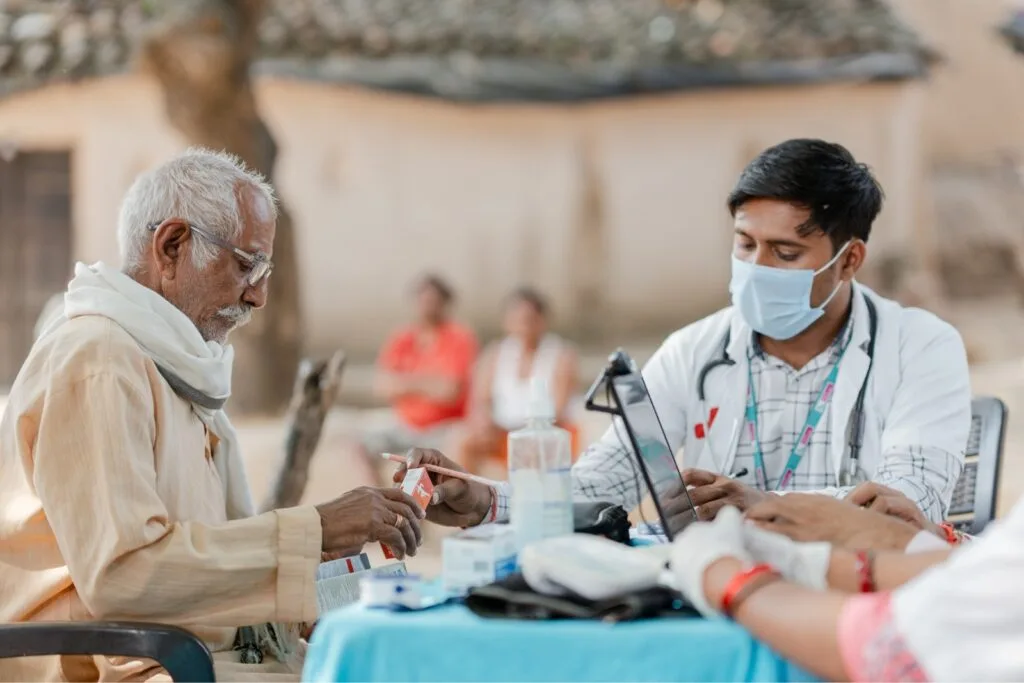
Most organisations running genuine CSR programmes have the same problem with their photography: the work is real, the investment is significant, the impact is documented — but the images do not show it.
Not because the programmes are performative. Because the photography was briefed as an event rather than as evidence.
The communications lead sends a photographer to the programme launch. The photographer captures the inauguration, the executive handshake, the group photograph. The images go into the sustainability report. The caption reads: “Our programme reached 4,200 beneficiaries across three districts.” And the photograph – a single inauguration at a single location cannot carry that claim.
These community impact photography guidelines exist for the communications leads, CSR officers, and programme managers who need their visual documentation to hold up to BRSR disclosure requirements, ESG rating agency review, institutional donor scrutiny, and the communities being photographed.
For a broader understanding of how CSR photography fits into an organisation’s full enterprise visual documentation strategy, see How to Photograph CSR Initiatives Without Looking Performative. This guide focuses specifically on the field-level framework: consent standards, ground-level conduct, brief architecture, and the ethical principles that govern community photography as a discipline.
Why Community Impact Photography Is a Distinct Discipline
Community photography and corporate event photography operate in the same industry but under fundamentally different rules.
At a product launch or leadership conference, everyone present has consented to being documented and has a shared interest in appearing credible. The environment is controlled, the schedule is known.
Community impact photography changes every one of those assumptions. The photographer enters real environments, villages, healthcare camps, school programmes, women’s livelihood centres, where the subjects are not stakeholders in the organisation’s communication strategy. They are people with their own lives, their own histories, and a categorical right to be represented with accuracy and dignity.
That distinction changes who you photograph and how you ask. It changes the images you prioritise. It changes what good photography means because technically excellent images that misrepresent a community or reduce people to props for corporate storytelling are not neutral. They are a liability.
India’s regulatory environment adds a compliance dimension that corporate event photography does not carry. Under SEBI’s BRSR framework, the top 1,000 listed companies by market capitalisation are required to make annual ESG disclosures with BRSR Core requiring third-party assurance for the top 150 companies from FY 2023-24. Photography serving these disclosures must meet an evidentiary standard, not just a communications standard. For the full regulatory context including Section 135 of the Companies Act, see What Is a CSR Film and Why It Matters in 2026.
The Decisions That Determine Your Documentation's Quality
Define the Output Before the Photographer Arrives
The most common source of unusable community photography is the absence of an output definition before the shoot. An annual report spread has different requirements from a social media series. A BRSR disclosure has different requirements from a donor impact update. Crop ratios, orientation, colour treatment, the balance between wide establishing shots and close portrait work all are shaped by end use. Shooting without that clarity produces a generic archive that serves none of the intended purposes adequately.
Before the photographer arrives: know exactly which outputs the shoot must serve, who the primary audience is for each, and what decision or response each output is designed to support.
Design the Consent Process, Not Just the Consent Form
Informed consent for NGO photography means explaining in the subject’s own language what the images will be used for, where they will appear, who will see them, and what the participant can do if they prefer not to be photographed. It means giving that information before the camera is raised.
Children require documented guardian consent. Non-negotiable. In sensitive contexts health, rehabilitation, legal aid, displacement and consent must be documented in writing, not assumed from attendance. Consent obtained for a specific use does not automatically extend to new publication contexts.
Keep the Crew Small and the Equipment Unobtrusive
This is a production decision, not a budget decision. A large crew with multiple cameras and lighting equipment changes the environment it enters. Community members behave differently when surrounded by a production presence and the interactions you wanted to document stop happening.
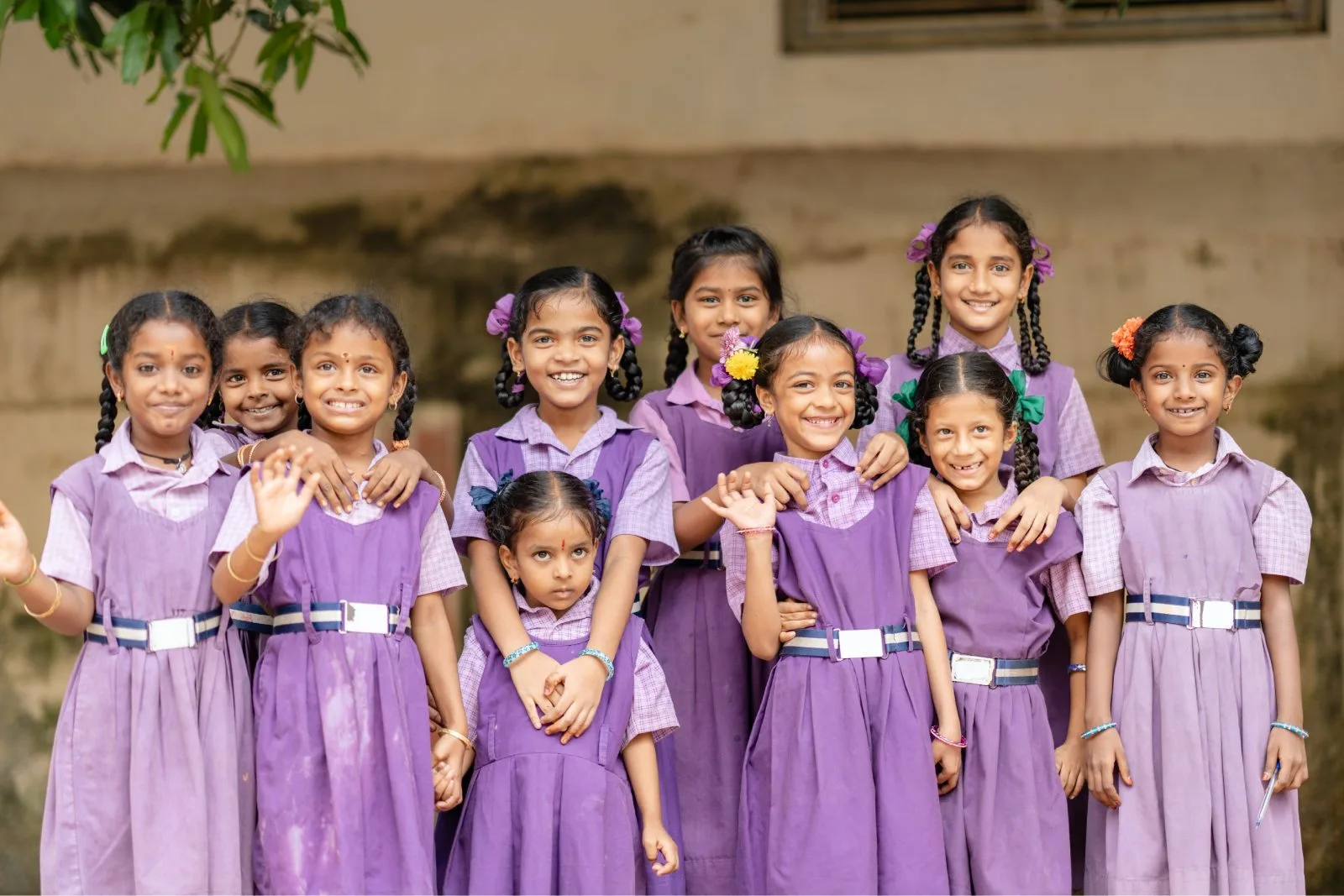
A two-person crew with documentary-appropriate equipment becomes part of the environment. Students return to their actual work. Participants continue their actual participation.
When CandidShutters Media documented Agilent India’s CSR initiative at a government school in Nawada, Gurugram, the crew comprised one traditional photographer and one cinematographer – a deliberate production decision. Students remained at ease, engaged with their learning activities rather than with the camera. The output covered sustainability reporting, social media, and internal documentation, delivered within a five-day turnaround from a single location visit. For the full account of that project, see Corporate CSR Photographer: Authentic Impact Stories.
Photograph What Is Actually Happening
Social impact photography has a well-documented tendency toward the curated version of events: spaces tidied beyond recognition, groups arranged by well-meaning coordinators, activities staged because the programme’s actual work was happening somewhere the photographer could not access.
The resulting images communicate effort. They do not communicate impact. Institutional audiences with experience in this field read the difference immediately.
The photograph that holds up is the one where someone is working, teaching, learning, or participating, and the camera is present rather than directing. This requires patience and the willingness to wait for real moments rather than produce approximate ones.
Document Across the Programme Timeline, Not Just at Launch
The visual archive of a programme that only captures launches and handover ceremonies tells an incomplete story. Any experienced stakeholder knows that a launch photograph tells them nothing about what the programme accomplished.
The most credible impact documentation photography follows a programme across time: the baseline environment, activity in progress at mid-programme, and outcomes when they are visible. That temporal depth cannot be produced in a single shoot. If your programme runs 18 months, your documentation plan should include visits at three or four points across that timeline, same community, same locations showing change rather than just activity.
Separate the Four Documentation Functions
At any meaningful scale, CSR and NGO photography serves four distinct functions that require different approaches:
Regulatory documentation – photography for BRSR disclosure and MCA submissions. Must be date-stamped, location-tagged, and activity-specific. This is evidence photography.
Sustainability report narrative – editorial photography communicating human outcomes and change over time. Audience: annual report readers, sustainability section.
Investor and ESG rating agency communication – photography demonstrating systemic impact to sophisticated audiences who will evaluate its authenticity critically.
Internal and stakeholder communication – photography for employee communication, government briefings, NGO partners, and digital channels.
Treating all four as a single output produces material that serves none fully. The most efficient approach is a single field visit structured from the brief stage to deliver distinct output sets for each function.
What This Looks Like in Practice
When CandidShutters Media documented Agilent India’s CSR programme at a government school in Nawada, Gurugram, the brief was clear from the start: capture the initiative authentically, centred on students and the learning environment, without staging or executive-presence framing.
The crew mapped the school for spaces that reflected the programme’s reality classrooms with active learning, open grounds with student activity, interaction zones showing genuine engagement. Wide frames established setting and scale. Close-up work captured human detail without reducing it to a generic beneficiary portrait. The same shoot produced photography for the sustainability report, social media assets and internal documentation structured at the brief stage for multi-format output, delivered in five days.
This is what corporate CSR photography looks like when the brief is written around the programme’s actual purpose rather than the visit schedule.
When In-House Documentation Is Not Sufficient
Professional documentation is required but not merely preferred in the following circumstances:
- The output will appear in an annual report, BRSR disclosure, or institutional donor communication
- The programme involves a high-profile corporate or government partner
- The community context is sensitive – children, health programmes, marginalised communities
- The photography must serve multiple downstream formats simultaneously from a single shoot
- The images need to function as argument or evidence rather than illustration – ESG audits, investor presentations, fundraising campaigns
Related Reading
- What Is a CSR Film and Why It Matters in 2026 – Foundational guide including Section 135 and full BRSR regulatory context
- How to Photograph CSR Initiatives Without Looking Performative – Enterprise-scale CSR photography brief and production standards
- Social Impact Video Production as a Strategic Business Asset – Building an ongoing documentation system beyond single shoots
- ESG Visual Content Strategy for Indian Listed Companies – BRSR compliance and ESG visual communication strategy
- Impact of Video on CSR Branding: Why Trust Converts in 2026 – Why visual documentation builds stakeholder trust more effectively than written reports
Work With a Community Impact Photography Partner Who Understands the Standard
CandidShutters Media works with communications leads and CSR officers at Indian corporates and NGO implementation teams who need community impact photography that holds up to BRSR scrutiny, ESG investor review, and the communities it documents.
Our work spans school digital literacy programmes, rural skill development, women’s livelihood documentation, community health access, and environmental responsibility initiatives across urban, peri-urban, and rural geographies in India.
Last updated on May 30th, 2026 at 06:38 pm

CandidShutters Media
Corporate Photography & Video Production Agency · Mumbai & Gurgaon · Est. 2012 · 14+ Years
International : Dubai · Sri Lanka · Malaysia · Thailand · Maldives · Worldwide