Visual Branding for B2B: How Market Leaders Build Trust, Influence Decisions and Accelerate Growth
Visual branding is the infrastructure of trust. It bridges the gap between ‘unknown vendor’ and ‘strategic partner’ by providing visual proof of scale and capability before the first sales call even happens.
Modern B2B buyers research deeply, validate socially and decide cautiously. The brands that win are those that look credible, consistent and enterprise-ready at every touchpoint.
This page explains what visual branding for B2B really means, how leading companies use it in practice and why it has become a boardroom priority.

The Reality of B2B Buying Today
B2B buying cycles are long. Decisions involve multiple stakeholders. Budgets are high. Risk is real.
Before engaging with sales, decision-makers now:
- Study websites and digital presence
- Observe leadership visibility
- Evaluate culture and people
- Look for infrastructure proof
- Search for customer validation
In this environment, a brand is not judged on claims. It is judged on credibility.
A weak visual presence creates hesitation.
A strong visual presence creates confidence.
In 2026, trust is built visually.
What Visual Branding for B2B Really Means
Visual branding for B2B is the strategic use of identity, design, imagery, video and digital experience to communicate a company’s reliability, capability and long-term value.
It acts as a silent decision influencer across long evaluation cycles.
It answers the unspoken buyer questions:
- Is this company established?
- Is it serious about quality?
- Can it operate at scale?
- Is it a safe long-term partner?
Unlike B2C branding, which often drives impulse, B2B branding reduces risk.
In modern markets, brands are chosen before proposals are read.
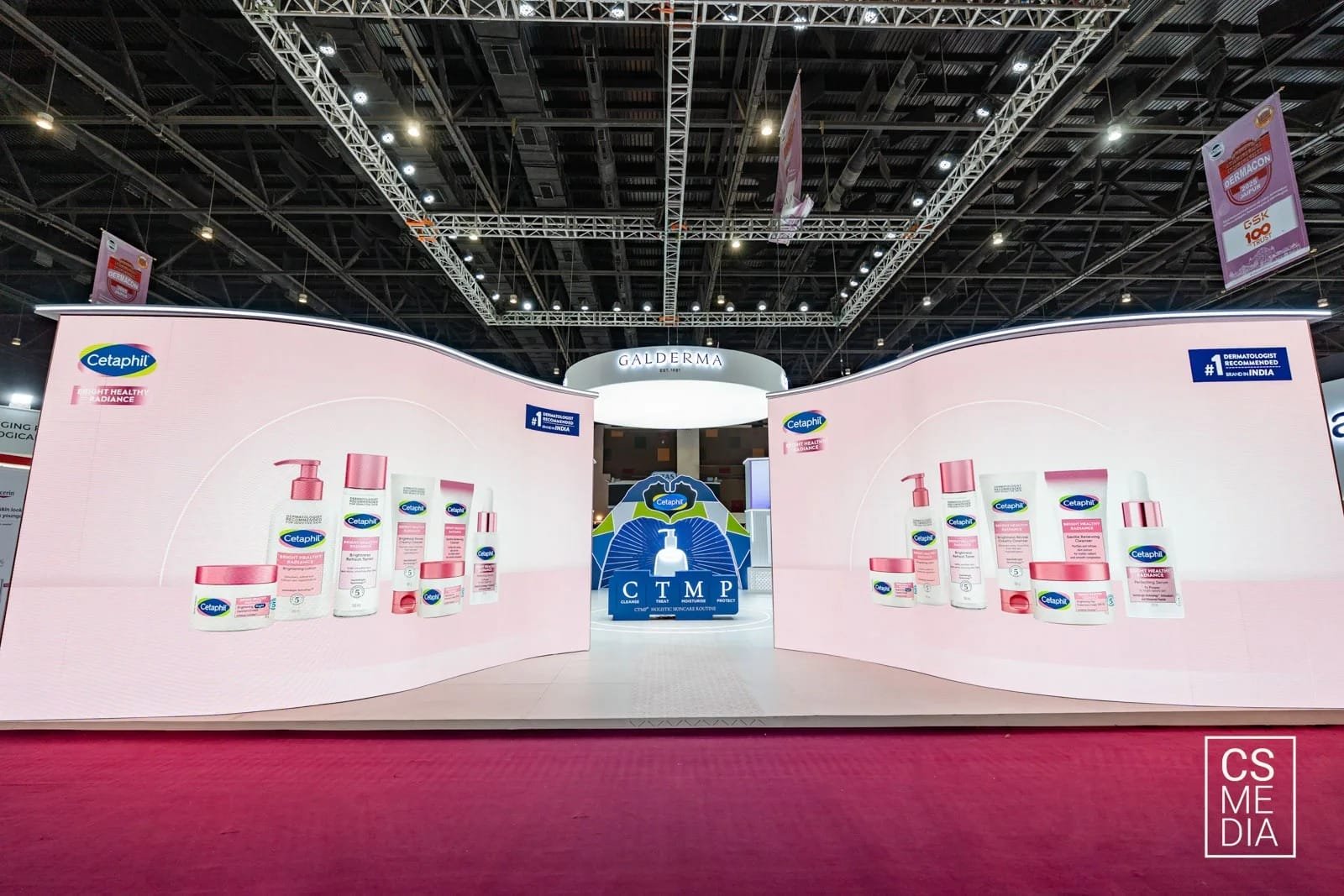
Types of Visual Branding in Modern B2B Organisations
Visual branding in modern B2B organisations is not a single discipline or function. It operates as a multi-layered brand system, working across different business objectives, stakeholder groups and decision-making stages. Each layer plays a distinct role in shaping perception, trust and long-term brand equity.
When executed strategically, these layers work together to create a consistent, credible and authoritative brand presence across the entire enterprise.
1. Corporate Branding
Corporate branding represents the most visible and recognisable layer of visual identity. It defines how the organisation is perceived by the market, investors, partners and media.
This includes the company’s brand identity system, website experience, corporate films, leadership videos and executive communications. It establishes brand personality, purpose, values and positioning. Strong corporate branding builds instant recognition, reinforces credibility and positions the organisation as a serious, future-ready enterprise.
2. Product and Solution Branding
Product and solution branding focuses on communicating complex offerings in a clear, compelling and credible way. In B2B environments where buying cycles are long and decision-makers demand clarity, visual storytelling becomes a critical business tool.
This layer includes explainer videos, motion graphics, product demos, technical visualizations, platform breakthroughs and digital product experiences. It simplifies complexity, accelerates understanding and supports sales enablement, pre-sales and solution marketing.
3. Employer Branding
Employer branding defines how current and future talent perceives the organisation. It directly influences hiring, retention and internal culture.
This layer is built through culture films, workplace storytelling, recruitment campaigns, leadership narratives and employee-led content. It showcases the company’s values, people, work environment and growth opportunities. Strong employer branding helps attract high-quality talent and positions the organisation as an employer of choice.
4. Infrastructure and Operational Branding
Infrastructure and operational branding demonstrates scale, capability, execution strength and operational excellence. It reassures enterprise buyers, investors and partners that the organisation can deliver at scale.
This includes factory walkthroughs, R&D films, office tours, manufacturing documentaries, process films and capability showcases. These assets build enterprise trust, highlight investment in innovation and reinforce operational maturity.
5. Market Presence Branding
Market presence branding defines how the organisation shows up in its business ecosystem. It establishes category authority and reinforces leadership positioning.
This layer includes conference branding, exhibition films, partner summit content, industry forum visuals, thought leadership videos, keynote films and event storytelling. It positions the brand as an industry leader and a serious voice within its sector.
6. Sustainable & ESG Branding
Sustainable and ESG branding is an increasingly critical layer in modern B2B branding. It visually demonstrates the organisation’s commitment to environmental responsibility, social impact and governance excellence.
This includes sustainability films, impact reports, ESG storytelling, green initiative showcases, community development films, and responsible manufacturing visuals. It provides visual proof for investors, regulators, partners and global stakeholders that the organisation is aligned with future-ready business practices.
Strong ESG branding is no longer optional. It is a strategic business requirement for global credibility.
Visual Branding Layers at a Glance
| Branding Layer | Business Objective | Key Visual Assets | Primary Stakeholders |
| Corporate Branding | Build brand perception, authority and trust | Brand films, website visuals, leadership videos, corporate identity | Market, media, investors, partners |
| Product & Solution Branding | Simplify complexity and drive sales enablement | Explainers, demos, motion graphics, product walkthroughs | Buyers, sales teams, solution partners |
| Employer Branding | Attract and retain top talent | Culture films, hiring campaigns, employee stories | Talent, HR, internal teams |
| Infrastructure & Operations Branding | Demonstrate scale and execution capability | Factory films, R&D tours, process documentaries | Enterprise clients, investors, regulators |
| Market Presence Branding | Establish category leadership | Event films, keynote visuals, exhibition content | Industry ecosystem, partners, customers |
| Sustainable & ESG Branding | Build future-ready credibility and impact leadership | Sustainability films, ESG storytelling, impact visuals | Investors, partners, regulators, global stakeholders |
A Unified Visual Brand System
In high-performing B2B organisations, these layers do not operate in isolation. They function as a unified visual brand system, shaping perception across every stakeholder touchpoint from boardrooms and sales meetings to hiring desks, factory floors, investor decks and global conferences.
Together, they define not just what the company sells, but what it stands for.
A strong visual branding ecosystem turns business strategy into a visible, credible and scalable brand narrative.
The Core Elements That Build Enterprise Trust
A high-performing B2B visual brand is built as a system, not as isolated assets.
It begins with a strong identity foundation. The brand mark, colour system and typography establish instant recognition and consistency across digital platforms, offices, products, and global trade environments.
It is reinforced through credibility storytelling. Leadership visibility, culture narratives, infrastructure walkthroughs and customer validation films replace generic stock imagery with authentic proof.
It is expressed through digital experience. Websites become research platforms. Video becomes the primary storytelling medium. Interactive tools support internal justification.
It is amplified through market presence. Events, conferences, partner summits, and industry platforms reinforce category authority.
It is strengthened through employer branding. Culture storytelling and workplace narratives attract talent and shape external perception.
Together, these elements form a brand buyers trust.
How Global and Indian Enterprises Apply Visual Branding
Market leaders treat branding as business infrastructure.
Microsoft and Salesforce invest heavily in leadership storytelling and customer success narratives. Siemens and Bosch use engineering and infrastructure storytelling to build global trust. Accenture and Deloitte build thought leadership platforms to reinforce category authority.
In India, Tata Group, Mahindra, Infosys, L&T, and Reliance invest in corporate films, culture storytelling, infrastructure branding, and employer branding to reinforce enterprise credibility.
These companies do not use branding as decoration.
They use it as strategic positioning.
Investment Logic and Business Impact
While enterprises rarely disclose branding budgets publicly, industry benchmarks show consistent patterns.
In India, B2B visual branding programs in 2025–2026 typically range:
- ₹5–10 lakhs for identity systems
- ₹15–30 lakhs for full visual branding programs
- ₹30 lakhs and above for complete brand transformations
Globally, similar programs range between $10,000 and $50,000+.
The business impact is reflected in:
- Higher inbound lead quality
- Faster decision cycles
- Stronger deal confidence
- Improved employer perception
- Long-term brand preference
Visual-first B2B brands consistently report:
- 3–5x higher engagement
- 25–40 percent faster sales cycles
- 30 percent higher trust perception
- 20–35 percent stronger talent retention
Brand is not a cost.
It is a compounding growth asset.

A Proven Model in Practice
High-performing B2B brands follow a repeatable structure.
They combine leadership branding, infrastructure storytelling, and customer validation into a unified brand narrative. They distribute this across digital platforms, sales enablement, and market events.
The result is a brand that looks credible, established, and enterprise-ready.
Over time, this translates into:
- Stronger inbound demand
- Better-qualified opportunities
- Faster conversions
- Higher lifetime value
This is how visual branding for B2B becomes a growth engine.
The Strategic Starting Point
For most B2B companies, the most effective starting point is infrastructure storytelling.
Factory walkthroughs, R&D films, office tours, and operational documentaries immediately communicate scale, capability, and seriousness.
They replace assumptions with proof.
In high-value B2B decisions, proof wins.

The Standards of Enterprise Production
High-stakes B2B media requires a production framework that goes beyond creative aesthetics. When documenting a large-scale organization, three professional parameters must be met:
Technical and Operational Accuracy: A visual brand must stand up to the scrutiny of technical experts. Production teams should possess the “domain awareness” to capture complex engineering, R&D, and shop-floor processes with total precision and safety compliance.
Non-Disruptive Methodology: Enterprise production must be invisible to the daily workflow. Professional engagement involves a “zero-disruption” approach, where the media team integrates seamlessly with plant managers and operations heads to ensure capturing the story never slows down the output.
Modular Asset Architecture: Strategic production is designed for high ROI. Instead of a single “video,” the process should yield a modular library—architecting a master narrative that can be repurposed into leadership clips, recruitment assets, and investor-grade stills for an entire year of communication.
The Closing Thought
In 2026, every serious B2B brand is a media brand.
Your market will form an opinion about your business whether you shape it or not.
The only question is whether that perception works for you or against you.
The strongest brands do not wait to be discovered.
They design how they are seen.
The Strategic Next Step
Every serious B2B brand eventually reaches a point where growth depends not just on products or pricing, but on perception.
When markets become crowded and offerings look similar, trust becomes the true differentiator. And trust is built long before the first conversation — through what buyers see, feel, and believe about your brand.
This is where visual branding for B2B stops being communication
and starts becoming strategy.
At CandidShutters Media, we work with B2B organisations that are preparing for their next phase of growth, market expansion, and enterprise positioning — helping them design how the world sees their people, their infrastructure, their culture, and their capability.
If your organization is ready to be seen as a market leader, let’s design your narrative.
Frequently Asked Questions (FAQs)
Visual branding for b2b examples
Visual branding for B2B includes consistent imagery, professional corporate photography, product visuals, brand films, and event documentation that communicate credibility and expertise. Examples include manufacturing facility showcase videos, leadership portraits, product demonstration visuals, trade show coverage, and workplace culture imagery that reinforce a company’s brand identity and trustworthiness.
The Importance of Visual Branding in B2B Manufacturing
The Importance of Visual Branding in B2B Manufacturing lies in building credibility and transparency. High-quality visuals such as factory walkthrough videos, product process documentation, safety compliance visuals, and facility photography help buyers understand operations, quality standards, and capabilities making it easier for decision-makers to trust the brand.
What Is B2B Branding?
B2B Branding is the strategic process of shaping how a business is perceived by other businesses through messaging, positioning, and visual identity. It includes elements like brand storytelling, corporate visuals, professional photography, brand films, and consistent design that communicate reliability, expertise, and long-term value to potential partners and clients.
Last updated on July 13th, 2026 at 05:58 pm

CandidShutters Media
Corporate Photography & Video Production Agency · Mumbai & Gurgaon · Est. 2012 · 14+ Years
International : Dubai · Sri Lanka · Malaysia · Thailand · Maldives · Worldwide