Impact of Video on CSR Branding: Trust Converts in 2026
The impact of video on CSR branding is not a communications preference, it is a trust architecture decision. In 2026, Indian corporates face compounding stakeholder skepticism, BRSR disclosure mandates, and an investor community that reads between the lines of every ESG report. Video does what reports, dashboards, and press releases cannot: it makes impact visible, human, and believable. This blog explains why video converts trust in CSR branding, what makes a CSR video credible rather than performative, where to use it, and what real CSR video production looks like in practice.
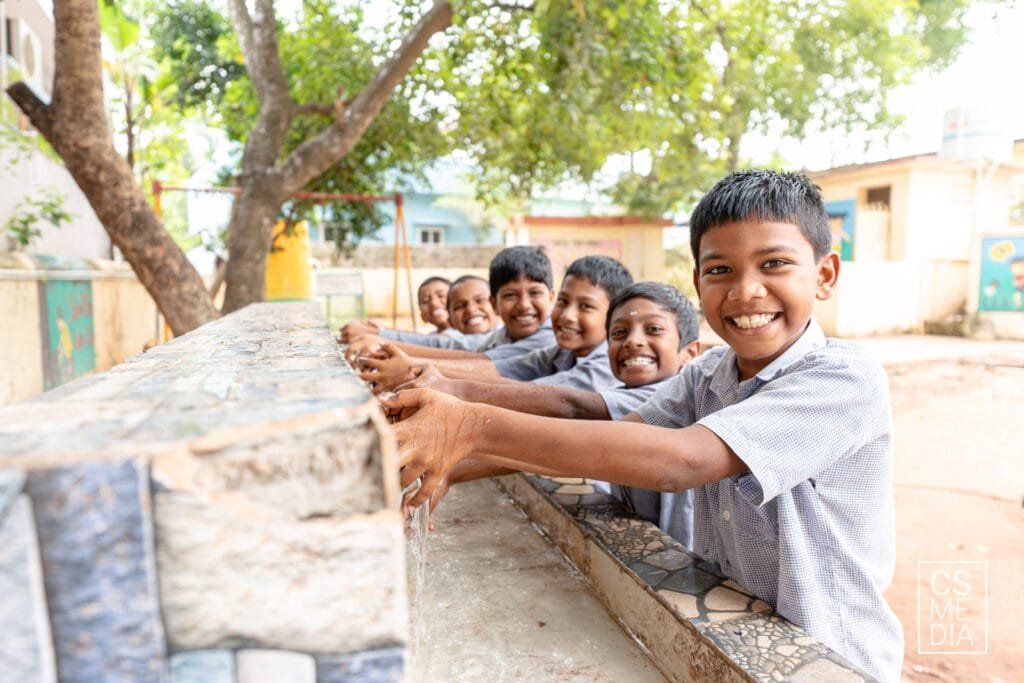
Impact of video on CSR branding means using video to make CSR visible, so stakeholders don’t just read claims, they see evidence, understand outcomes, and trust the intent behind them.
The challenge facing most organisations running genuine CSR programmes is not a lack of impact. It is a lack of belief.
Stakeholders investors, employees, communities, regulators and media have grown deeply skeptical of CSR claims. According to a McKinsey survey (2021), 88% of Gen Z respondents said they do not trust brands’ ESG claims. That figure has not improved since. McKinsey’s subsequent research found that Gen Z trust in ESG claims declined across five of six major markets between 2021 and 2023. The trust gap is not closing. It is widening.
This is the environment in which impact of video on CSR branding becomes a strategic question, not a production question.
The organisations building genuine CSR credibility in 2026 are not the ones with the largest budgets or the most detailed sustainability reports. They are the ones making their impact visible in the format that human beings actually trust: video.
Why Reports, Dashboards, and PR Are No Longer Enough
Before addressing what video does, it is worth being clear about what other formats do well and where they stop.
CSR and sustainability reports are the compliance backbone. KPMG’s Survey of Sustainability Reporting 2022 found that 96% of the G250 companies globally now publish sustainability reports. They are table stakes. They communicate governance, KPIs, spend, and audit trails. What they do not do is create emotional belief. A reader can process a sustainability report and still not trust the organisation behind it.
CSR web pages and impact dashboards are the reference layer. They are permanent, searchable and linkable, useful for institutional investors, NGO partners, and journalists doing background research. But they are passive. People scan them. They do not experience them.
Press releases and social posts are the awareness layer. They help with reach, but in a market where greenwashing concerns are at their highest point, they can actively trigger skepticism rather than resolve it.
The pattern in 2026 is clear: reports are the accountability engine. Video is the belief engine. The most effective CSR communication strategies deploy both with reports providing the data layer and video providing the human layer.

What Video Does That Nothing Else Can
The impact of video on CSR branding is not simply that it is more engaging. It is structurally different from every other format in three specific ways.
1. Video creates witnessed evidence, not claimed evidence
When a beneficiary speaks directly to camera about how a programme changed their life, the audience witnesses it. They are not being told about an outcome, they are watching it happen in real time. This is the fundamental reason video builds trust faster than any written format. The claim and the proof are delivered simultaneously.
2. Video eliminates the abstraction gap
Corporate CSR reports describe programmes in aggregate number of villages reached, number of beneficiaries served, percentage improvement in outcomes. These numbers are meaningful to auditors and board committees. They are abstract to everyone else. Video collapses that abstraction. A viewer who watches a farmer describe how a water conservation programme changed his crop yield in a specific season in a specific village has a concrete, memorable, shareable piece of evidence.
3. Video is the format stakeholders are already conditioned to trust
LinkedIn reported 36% year-on-year growth in total video viewership in early 2025, with video creation growing at twice the rate of other content formats on the platform. Wyzowl’s Video Marketing Statistics 2026 found that 91% of businesses now use video as a communication tool. The attention economy has shifted. Stakeholders including senior executives, board members, and institutional investors are consuming information primarily through video. A CSR communication strategy that does not include video is speaking in a format its audience has largely moved away from.
The India Context: Why This Matters More for Listed Indian Companies
For Indian corporates specifically, the pressure to make CSR communication credible is compounded by two regulatory realities that do not exist in the same form in most other markets.
Section 135 of the Companies Act, 2013 mandates that companies meeting any one of three thresholds net worth of ₹500 crore or more, turnover of ₹1,000 crore or more, or net profit of ₹5 crore or more must spend 2% of their average net profits on approved CSR activities. According to data from the Ministry of Corporate Affairs (MCA21 registry, csr.gov.in), CSR spending by listed Indian companies reached ₹17,967 crore in FY 2023-24. That is a significant and growing pool of documented social investment.
SEBI’s Business Responsibility and Sustainability Reporting (BRSR) framework now requires the top 1,000 listed companies by market capitalisation to disclose their ESG performance as part of their annual reports. As BRSR matures, stakeholders particularly institutional investors applying ESG screens are looking beyond the disclosure format for evidence that the numbers are real.
This is precisely where CSR video becomes a governance-adjacent asset, not just a communications one. A well-produced CSR documentary provides visual, auditable evidence of programmes that would otherwise exist only as line items in a disclosure framework. For companies navigating BRSR reporting, investor ESG scrutiny, and public stakeholder trust simultaneously, video is one of the most efficient investments available.

What Makes a CSR Video Build Trust
Not all CSR video works. The most common mistake organisations make is treating CSR film production like brand film production polished, controlled, executive-heavy and designed to impress rather than convince.
Audiences in 2026 can identify performative CSR content immediately. And when they do, the damage to trust is worse than if no film had been made at all.
The principles that separate genuinely credible CSR video from corporate performance are consistent across every project we have produced.
Put beneficiaries first, always Real CSR films centre on the people the programme has served not on the company’s leadership, not on the corporate logo, not on the financial investment. When the camera is on a real person in a real place speaking in their own words, the viewer’s default response is trust. When the camera is on a boardroom or a leadership speech, the viewer’s default response is skepticism.
Never script the people you are filming Scripted testimonials read as scripted. The viewer knows. Unscripted, directed conversation, where the crew creates the conditions for honest expression rather than managing what is said produces content that no script could replicate. The hesitations, the specific details, the unexpected emotion: these are the signals that tell a viewer they are watching something real.
Show specific outcomes, not generic claims “We improved livelihoods across three states” is a claim. “Ranjit Singh in Nabha, Punjab, increased his crop yield by 40% in the first season after the irrigation programme reached his village” is evidence. CSR films that deal in specifics – specific people, specific places, specific changes are trusted. CSR films that deal in generalities are not.
Be honest about limitations The strongest CSR films acknowledge what the programme has not yet achieved alongside what it has. This counterintuitive honesty is one of the most powerful trust signals in documentary filmmaking. An organisation that is willing to show its work in progress earns more credibility than one that presents only finished success stories.
Design for distribution from the start A CSR film shot without a distribution strategy is a missed opportunity. The same footage, shot with the right coverage, can deliver a 6-minute flagship documentary, a 90-second LinkedIn cut, a 30-second board presentation opener, and a 2-minute annual report embed. The investment in one shoot creates multiple long-term communication assets but only if distribution is considered before the camera rolls.
CandidShutters Media: What CSR Video Production Looks Like in Practice
HUL Prabhat: Proof Is in the People
For Hindustan Unilever’s Prabhat programme, we produced a CSR documentary spanning four regions across India – Nabha in Punjab, Sumerpur in Uttar Pradesh, Chhindwara in Madhya Pradesh, and Rajahmundry in Andhra Pradesh.
The programme covers sustainable farming, water conservation and pond restoration, women’s livelihood centres, mobile healthcare units, skill development infrastructure, and community waste management. The brief was to document real impact, not to produce a brand film.
Every interview in the film is unscripted. Farmers, women entrepreneurs, and village leaders speak in their own voices about what changed in their lives and why. There is no narration telling the viewer what to feel. The people in the film do that themselves.
The film functions simultaneously as ESG communication for investor audiences, stakeholder evidence for BRSR reporting, and internal motivation for HUL’s CSR and sustainability teams. It was delivered in 15 days across four states.
Watch the HUL Prabhat CSR Documentary: Proof Is in the People
Archies: Adopt a Mother
For Archies’ Adopt a Mother campaign, we documented a brand-led social initiative built around the adoption and consistent care of elderly and abandoned mothers across India. The film follows individual journeys from isolation to dignity, from neglect to regular healthcare and emotional support.
The campaign resonated across social platforms and mainstream media because it was not positioned as a brand campaign. It was told as a human story. Real mothers. Real adoption journeys. Real emotional transformation. No executive framing. No brand messaging layered over the content.
That emotional honesty is why the campaign earned organic traction and long-term public recall and why it continues to be used in Archies’ brand communication, CSR reporting, and public-facing campaigns.
Watch the Archies Adopt a Mother CSR Impact Film
Both projects demonstrate the same truth: the most effective CSR videos are not made, they are witnessed. The production agency’s role is to create conditions for honest stories to emerge, and then stay out of the way.
Where to Use Your CSR Video - A Channel Guide
A single well-produced CSR film is not a single-use asset. Here is where it belongs and how it performs across channels.
Company sustainability page and CSR hub The primary home for the flagship film. This is where investors, journalists, NGO partners, and regulators will look for evidence of programme credibility. A 3–5 minute film embedded here gives every visitor direct access to your proof.
Annual report and BRSR disclosure A 2–4 minute version, professionally edited for a board and investor audience. Embedded in the digital version of the annual report and linked from the BRSR section. Turns a compliance document into a credible narrative.
LinkedIn and YouTube A 60–90 second cut, optimised for platform-native viewing. LinkedIn’s own data shows video is shared at dramatically higher rates than other content formats, this is your highest-reach distribution channel for executive and professional audiences.
Investor presentations and AGMs A 2–4 minute version with clear outcome framing. Plays before or after leadership addresses to provide human context for ESG commitments discussed in board communication.
Internal town halls and onboarding The full film or a version edited for internal audiences. CSR films used internally build employee pride, reinforce company values, and give new joiners direct evidence of the organisation’s social commitments, not just claims in an induction presentation.
Recruitment campaigns A 60–90 second cut shared through talent acquisition channels. For organisations where CSR is genuinely embedded in company culture, this is one of the most effective employer branding assets available.

Related Reading
If you are building a full CSR communication strategy, these guides from our blog go deeper on specific aspects of this topic:
- What Is a CSR Film and Why It Matters in 2026 – The complete guide to CSR film formats, types, costs, and production process
- How to Photograph CSR Initiatives Without Looking Performative – The photography equivalent of this guide
- Community Impact Photography Guidelines for NGO and CSR Teams – Ground-level documentation standards
- ESG Visual Content Strategy for Indian Listed Companies – BRSR compliance and ESG visual communication strategy
- ESG Film: Sustainability Report and Stakeholder Relationships – How ESG films strengthen reporting and investor trust
If Your CSR Work Is Real, Make Sure It Is Seen
At CandidShutters Media, we produce CSR films for organisations whose programmes deserve to be witnessed, not just reported.
If your organisation is running something real, for real people, we will help you document it with the honesty and rigour that real work deserves.
Last updated on May 29th, 2026 at 06:39 pm

CandidShutters Media
Corporate Photography & Video Production Agency · Mumbai & Gurgaon · Est. 2012 · 14+ Years
International : Dubai · Sri Lanka · Malaysia · Thailand · Maldives · Worldwide