CandidShutters Media

7 Types of Corporate Films and When Your Brand Actually Needs Each One

March 20, 2026 • Pranjal Kumar
types of corporate films

Your Competitors Are Already on Film. The Question Is Whether They're Doing It Right.

A Fortune 500 CHRO walks into a vendor review. Two production studios are on the shortlist. One delivers a 3-minute “corporate film.” The other delivers a 3-minute internal culture film designed to reduce attrition in the first 90 days of onboarding. Same runtime. Entirely different brief. Entirely different result.

This is the gap between brands that treat corporate films as a checkbox and brands that use them as a strategic communication asset. And in India’s corporate landscape right now – where MICE events are back at scale, ESG narratives need visual proof, and B2B buyers are consuming more video before they ever take a meeting – the difference matters more than it ever has.

Over 14 years and 300+ corporate film projects across Delhi NCR, Gurugram, and Mumbai, the single most common briefing error we see is format confusion. If you are a CEO, CMO, or Head of Corporate Communications deciding whether to greenlight a film, the most important question is not ‘Should we make a corporate film?’ It is ‘which type of corporate film are we actually making, and why?

Let’s break it down.

1. Brand Film (Corporate Identity Film)

What it is: A brand film communicates who your organisation is at its core. Values, vision, culture, positioning. It is not a product showcase or a highlights reel. It is a statement of identity.

Who uses it and when:

  • Conglomerates launching a new vertical or repositioning after a merger
  • Companies entering a new geography or market segment
  • Organisations undergoing leadership transitions where the brand narrative needs to be reset

Real-world example: When Tata Group refreshes its overarching brand communication, or when a private equity-backed company goes through a rebranding post-acquisition, the brand film is the anchor asset. It’s what goes on the homepage, plays at the Annual General Meeting, and sets the visual vocabulary for everything else.

When you need it: If your current communication does not clearly answer “what does your company actually stand for,” it is time for a brand film.

2. Event Coverage Film (Corporate Event Film)

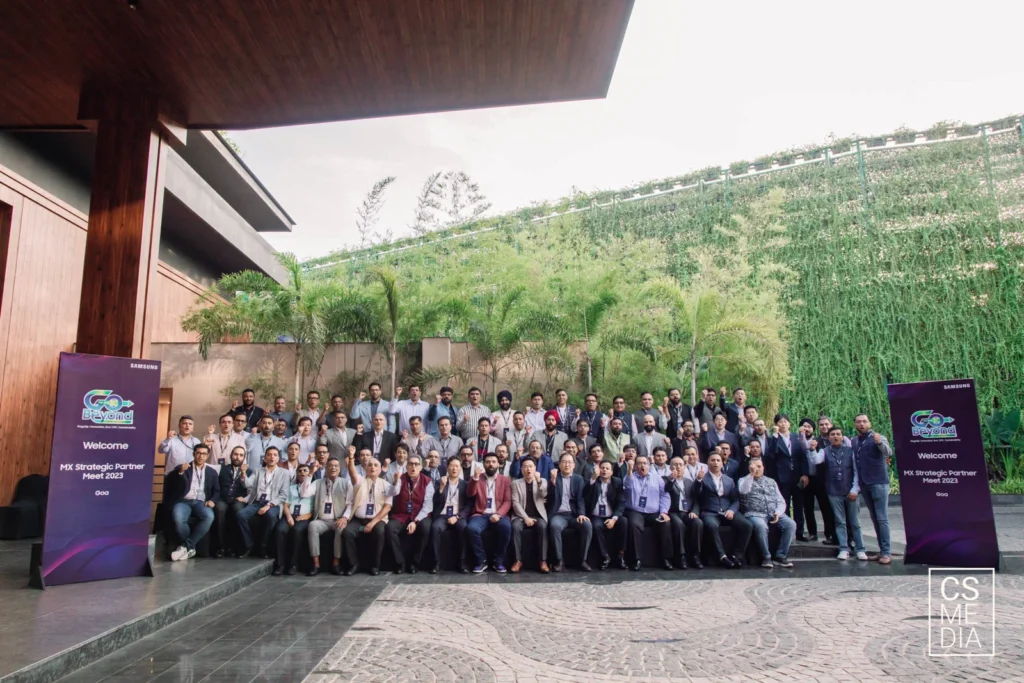
What it is: A professionally produced film documenting a corporate event – summits, investor conclaves, dealer meets, product launches, MICE events, government initiatives, or large-scale conferences.

Who uses it and when:

  • Event managers and corporate communications teams who need a deliverable beyond photography
  • Government bodies and PSUs documenting flagship initiatives and industry summits
  • Companies who want to extend the ROI of a high-investment event beyond the day itself

Real-world example: A global investor conference hosted by a leading private equity firm in Gurugram. 200+ attendees, two days, keynotes and breakout sessions. The event film captures not just the proceedings but the atmosphere, the conversations, the credibility. That film then circulates to LPs, appears on LinkedIn, and becomes a trust signal for future portfolio companies.

Key consideration: Event coverage films have a very short shelf life if they are not produced with distribution in mind. A film that takes six weeks to deliver after an event is largely useless for social and media amplification. Brief your production team on turnaround expectations before the event, not after.

When you need it: Every flagship corporate event with a stakeholder audience that extends beyond the room.

3. Product or Service Demo Film

What it is: A film that demonstrates how a product or service works, its features, its differentiators, and its use cases. Primarily B2B in the corporate context, though it applies across sectors.

Who uses it and when:

  • Sales teams who need leave-behind content for enterprise accounts
  • Marketing teams activating at trade expos and industry exhibitions
  • SaaS companies, manufacturing firms, and infrastructure brands explaining complex offerings

Real-world example: An industrial automation company exhibiting at a sector-specific trade expo needs more than a brochure. A 90-second product demo film running on a loop at their stall communicates what a printed spec sheet cannot: the product in motion, in context, in application.

When you need it: Anytime the answer to “what does your product do?” requires more than words.

4. Testimonial and Case Study Film

What it is: A film featuring clients, customers, or stakeholders speaking to their experience with your organisation. When done well, it is the most credible form of corporate video content in existence.

Who uses it and when:

  • B2B companies in long sales cycles where trust is the primary conversion variable
  • Professional services firms (consulting, legal, financial advisory) where outcomes are hard to quantify in other formats
  • Healthcare organisations, academic institutions, and NGOs demonstrating real-world impact

Real-world example: A leading NBFC that has just completed a landmark deal wants to document the process and outcome. A 3-minute case study film featuring the founder speaking candidly about the challenge, the decision, and the result is 10 times more persuasive than a PDF case study to the next prospective client in the same sector.

When you need it: If you are in a relationship-driven, high-consideration industry and you are not using client voices on film, you are leaving significant trust capital on the table.

5. Internal Communication and Culture Film

What it is: Films produced for internal audiences – employees, new joiners, cross-functional teams, or leadership. Includes culture films, induction content, change management communication, and internal town hall recaps.

Who uses it and when:

  • CHROs and HR leadership during large-scale hiring drives or restructuring phases
  • Companies with multi-city or multi-country operations where consistent communication is a logistical challenge
  • Organisations managing culture through periods of rapid growth or M&A activity

Real-world example: A tech company scaling from 500 to 5,000 employees over 18 months cannot rely on in-person onboarding to communicate culture consistently. A series of internal culture films, featuring real team leads across functions, becomes the cultural anchor for every new joiner regardless of location or cohort.

When you need it: If your attrition numbers, employer brand scores, or internal survey data suggest that employees do not have a clear sense of who the organisation is, this format deserves serious consideration.

6. CSR and ESG Impact Film

What it is: A film documenting your organisation’s social, environmental, or governance initiatives. Not a PR exercise. At its best, this is accountability on ESG film production.

Who uses it and when:

  • Listed companies with mandatory CSR disclosures under the Companies Act
  • Brands building ESG narratives for institutional investors and sovereign wealth funds
  • Organisations participating in government-led sustainability or social development programmes

Real-world example: A manufacturing conglomerate with an active CSR programme in water conservation. They have the data. They have the communities. They have the project teams. What they are missing is the visual narrative that takes the Annual Report section and turns it into something a pension fund manager or an ESG analyst will actually watch.

Key consideration: CSR films that feel like advertising lose credibility instantly. The best ones feel like documentary journalism. Real people. Real outcomes. Real accountability.

When you need it: Before your next sustainability report, investor roadshow, or any stakeholder communication where impact claims need visual substantiation.

7. Thought Leadership and Executive Communication Film

What it is: Films positioning senior leadership as credible voices in their domain. Interview-format or panel-style productions featuring the CEO, MD, or CXO team. Often used in conjunction with industry events, conference appearances, or content marketing strategies.

Who uses it and when:

  • CEOs and founders building a personal brand in alignment with their company’s positioning
  • Executive teams preparing for funding rounds, IPOs, or sector-leadership moments
  • Corporate affairs and communications heads activating post-award or recognition events

Real-world example: A founder of a fintech company just spoke at a major industry conference. The 45-minute session has limited reach on its own. A produced 6-minute thought leadership film, drawing on the core thesis from that session with clean visuals and tight editing, reaches a qualified audience on LinkedIn, gets embedded in pitch decks, and builds the founder’s credibility with the press, investors, and prospective hires simultaneously.

When you need it: If your CEO has something genuinely valuable to say and no compelling visual format to say it in, this is the format.

How to Choose the Right Type of Corporate Film

Here is the practical filter. Before briefing any corporate production partner, answer these three questions:

  • Who is the primary audience? (Investors, employees, customers, media, government stakeholders?)
  • What is the single most important action you want that audience to take after watching? (Trust the brand, sign a contract, apply for a role, share on social media?)
  • Where will this film live and for how long? (Event screen, homepage, LinkedIn, internal intranet, investor deck?)

The answers to these three questions determine the format, duration, tone, and production complexity. A film that tries to serve all audiences serves none of them well.

It is also worth noting that a well-produced event coverage film can be repurposed into a brand communication asset. A thought leadership film can double as a testimonial. The production budgets compound when there is a distribution strategy behind them.

Summary

Film Type Primary Audience Core Objective 
Brand Film External stakeholders, media Identity and positioning 
Event Coverage Film Clients, LPs, industry Documentation and amplification 
Product/Service Demo Sales prospects, trade audiences Feature communication 
Testimonial/Case Study B2B buyers, sector peers Trust and social proof 
Internal Culture Film Employees, new joiners Alignment and retention 
CSR/ESG Impact Film Investors, regulators, public Accountability and credibility 
Thought Leadership Film Media, investors, industry Authority and brand equity 

The corporate film landscape in India is maturing fast. What passed for “a corporate video” three years ago is now a liability compared to what well-resourced competitors are producing for their MICE events, investor decks, and digital channels. The brands getting this right are not spending more. They are briefing better.

Work With a Production Partner Who Knows the Difference

CandidShutters Media has spent over 14 years producing corporate films across these categories for Fortune 500 companies, government initiatives, MICE events, and C-suite communication projects across Gurugram, Delhi NCR, and Mumbai.

If you have an event, a product launch, a leadership communication need, or an ESG initiative that needs to be documented and distributed with intent, we would be glad to discuss the brief.

Get in touch with CandidShutters Media.

FAQ's

1. How do I choose the right type of corporate film for my brand goals?
Honestly, it comes down to what you want the video to do. If you’re trying to build awareness, a brand film works. If you’re explaining a product, go for an explainer or demo. And if trust is your priority, testimonial videos usually perform best. Different corporate films serve very specific purposes, there’s no one-size-fits-all.

2. When should a business invest in a corporate film instead of regular content?
If your brand is entering a new market, launching something big, or struggling to simplify its messaging, this is where corporate films make sense. They help communicate complex ideas quickly and visually, which standard posts or static content often can’t achieve.

3. What type of corporate video actually drives conversions or leads?
If the goal is conversions, testimonial videos and product demos tend to perform really well. They show real impact and build trust, which directly influences buying decisions. Promotional films help attract attention, but trust-driven formats usually close the deal.

4. How long should a corporate film ideally be for better engagement?
There’s no fixed rule, but most effective corporate films stay between 1 – 3 minutes for explainers and up to 5 – 10 minutes for detailed brand or profile videos. The key is keeping it tight and purposeful, attention drops fast if the message drags.

5. Do corporate films really help with SEO and online visibility?
Yes, and more than most brands realize. Video content increases time on site, improves engagement, and is often prioritized by search engines. It also gives you more opportunities to rank across platforms like Google and YouTube.

Pranjal Kumar

About the author

Pranjal Kumar

Creative Lead and Director at CandidShutters Media, Pranjal Kumar transforms raw, reality-based documentation into cinematic excellence. He leverages a strategic background to help corporate clients translate complex brand stories into high-impact, unfiltered narratives. Whether orchestrating nationwide initiatives or high-stakes organizational storytelling, he is dedicated to capturing the human connection behind every business objective.

Last updated on March 27th, 2026 at 04:04 pm

Welcome to CandidShutters Media.

We are your one stop solutions provider for corporate photography and videography, brand films, corporate documentaries, employer branding photography, testimonial videos, corporate event photography, csr photography and all brand engagement content generation.

We are based in Gurgaon (Delhi NCR) and Mumbai but are available for assignments world over.