What Happens to the Data After the Cameras Stop Rolling?
What happens to your project footage after the cameras stop rolling? For corporate productions, industrial shoots and C-suite summits, those unrepeatable moments demand rigorous data protection. In this post, we take you behind the scenes of CandidShutters Media’s end-to-end data workflow exploring how we handle on-location speed and card rotation, maintain centralized Excel logistics, execute verified ShotPut Pro transfers (and why we skip NAS) and secure your assets through long-term archival. Read on to discover the exact discipline that keeps critical project files safe, mobile and recoverable from capture to final delivery.
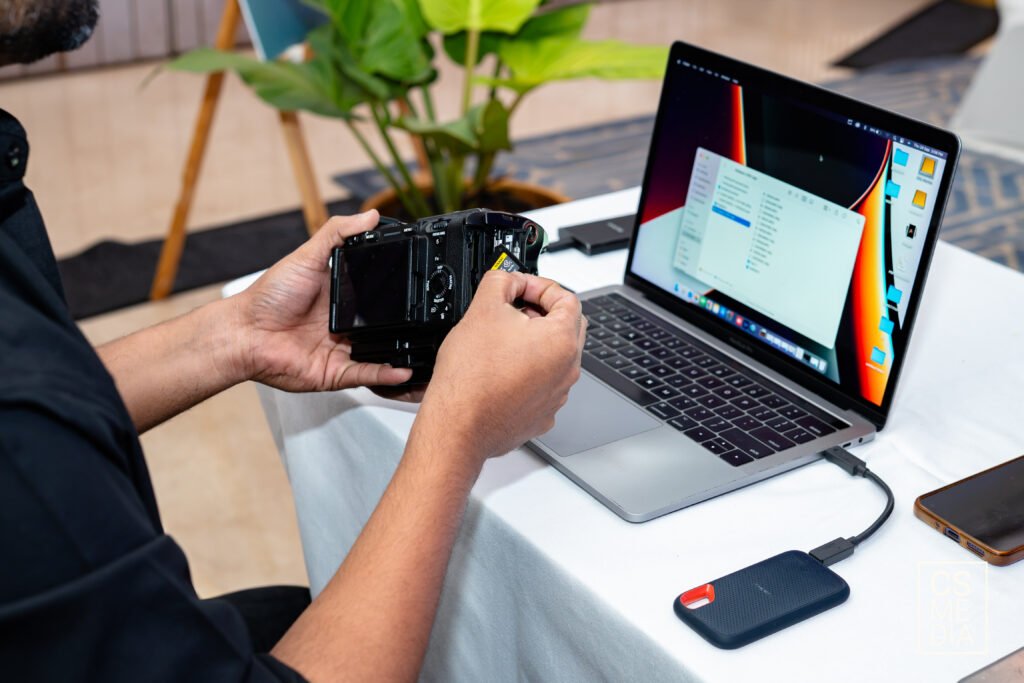
In commercial photo and video production, capturing the visuals is only one part of the job. What happens to the data after the cameras stop rolling is another story altogether.
Whether we are documenting an industrial walkthrough, a C-suite executive summit or a large-scale global event, the footage we capture can represent days of planning, multiple crew members, expensive equipment and most importantly moments that cannot simply be recreated.
Over the years, as our visual production operations have grown, we have built a structured approach to video production data management, backup and archiving. The system is designed to protect data integrity, maintain operational speed and ensure that project files remain recoverable, while keeping our field teams mobile and free from unnecessary infrastructure.
On-Location Rigor: Speed, Safety and Smart Card Rotation
When shooting on location, efficiency and data security have to work together. Our field protocol is built around minimizing risk while maintaining a smooth approach to data management from the moment footage is captured.
Our cameras use Sony Tough CFexpress cards for primary capture. Although the cameras have a second card slot, we do not use simultaneous dual-card recording during live shoots. This is a deliberate choice based on the demands of our production environment.
We regularly shoot at high resolutions and high frame rates, which places significant demands on camera batteries. As a standard production policy, we carry multiple batteries for our camera systems. Even with this provision, battery optimization remains critical over long shooting days. Running simultaneous recording across both card slots increases battery consumption, so we have designed our approach around a different form of redundancy.
Rather than relying on the second card slot for in-camera duplication, we take real-time backups during the shoot itself.
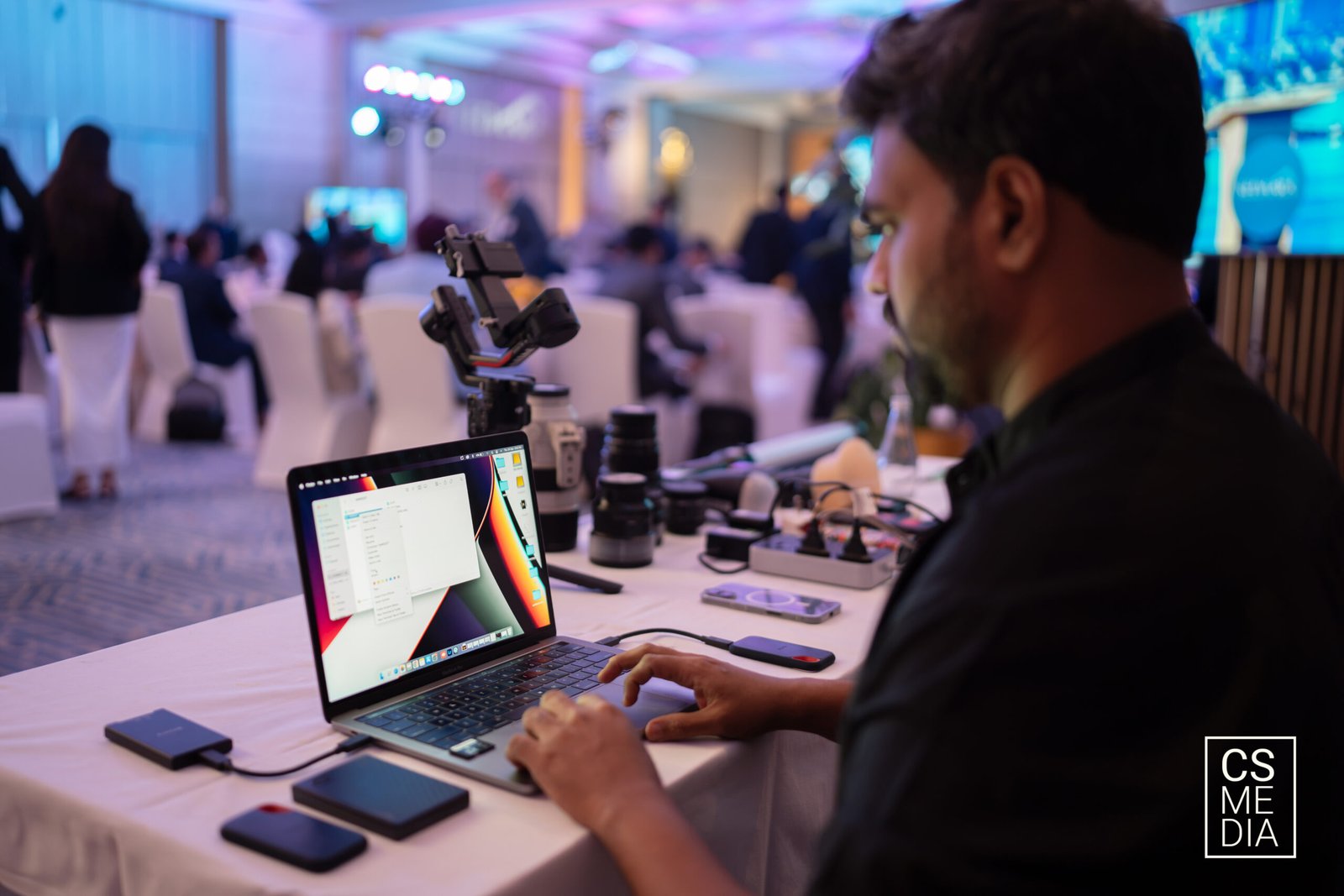
We do not wait for a card to fill completely before securing its contents. As footage is captured, our on-location coordinators regularly offload the data using SanDisk portable SSDs, MacBooks and professional Type-C card readers. The data is backed up across multiple SSDs while the shoot is still underway.
This serves three purposes: safeguarding the footage as the production progresses, keeping the data organized as the shoot develops and creating redundancy before the media leaves the venue.
By the time we wrap a shoot, the captured footage exists across multiple independent storage drives on location. Our production data is therefore not dependent on a single recording medium.
We also take a preventive approach to our recording media. Rather than waiting for performance issues or failures to appear in the field, we proactively retire and replace our memory cards on a 1-to-1.5-year cycle.
Real-Time Tracking with Centralized Logistics
Managing large volumes of data across multiple concurrent productions requires clarity on where every project resides.
To reduce human error and guesswork, we maintain a centralized Excel-based inventory that maps our drives, SSDs and other storage media across the operation.
As data is offloaded or moved during a shoot day, the tracking document is updated. Drive identifiers and serial references are logged alongside the relevant project and shoot names.
This gives our team immediate visibility, allowing us to locate a project’s assets across our storage infrastructure without having to physically connect multiple drives simply to determine where a project is stored.
For a production company handling multiple projects simultaneously, this visibility becomes as important as the storage itself.
Office Offloading and Staged Post-Production Handoffs
Once a production returns to the office, the data moves from our high-speed field storage to our stationary office storage infrastructure.
Raw footage from the field SanDisk SSDs is transferred to our primary WD (Western Digital) power-connected drives, freeing the field SSDs for the next deployment. From there, working copies are made available to the relevant photo and video editors so that post-production can begin without disrupting the underlying storage structure.
Our field storage has evolved over time. We have historically used dual SSD setups on location when the production required additional speed and redundancy, while continually balancing storage capacity, transfer speeds and cost as our operations have grown.
The objective is not to use the most expensive storage at every stage. It is to use the right type of storage for the stage of production it serves.
Verified Transfers and Why We Don't Use NAS
In media production, a completed file transfer is not simply a matter of checking whether a folder appears on another drive or whether the destination folder has the expected size.
For critical production transfers, we use software such as ShotPut Pro to create verified copies of media rather than relying solely on a standard copy-complete notification. This adds an additional verification step to the transfer process and gives our team greater confidence that the working copy corresponds to the source media.
Another deliberate choice in our infrastructure is the decision not to use Network Attached Storage (NAS) as the centre of our production data management system.
NAS systems can be highly effective in fixed studio environments. Our production model, however, is different. Our teams regularly move between cities, venues and offices and project storage often needs to move with the production.
For us, portability is therefore a core operational requirement.
Our combination of SanDisk portable SSDs, WD (Western Digital) high-capacity power-connected drives and verified transfer tools gives us the mobility our production teams need without losing the discipline of a structured storage system.
Long-Term Archival and Client Peace of Mind
Our responsibility to a project does not end when the final edit is delivered.
RAW assets are retained securely through the editing and approval process and for the post-delivery retention period specified in our project terms. Once final sign-off is secured and the agreed high-resolution deliverables have been successfully handed over, RAW files are systematically removed from our active storage.
Final edited high-resolution deliverables, however, are retained as part of our long-term archive across dual WD (Western Digital) power-connected drives.
Corporate clients sometimes return years later for previously delivered assets. A past campaign may need to be revisited, an older event may become relevant to a new presentation or a previously delivered film or photograph may need to be supplied again.
Maintaining a structured archive of final deliverables gives us the ability to retrieve and re-supply those assets when required.
Discipline Behind Video Production Data Management
For us, video production data management is part of production, not something that begins after production is finished.
Every project moves through a defined chain of capture, real-time backup, verification, tracking, post-production and archival. The individual tools may change as technology evolves, but the underlying discipline remains the same.
The objective is straightforward: every project should remain accounted for from the moment it is captured until the final deliverables enter our long-term archive.
In an industry where the value of the work often needs to last long after an event, production or campaign is over, that discipline matters.
Inside CandidShutters Media’s approach to video production data management, real-time backups, verification, storage tracking and long-term archiving.

CandidShutters Media
Corporate Photography & Video Production Agency · Mumbai & Gurgaon · Est. 2012 · 14+ Years
International : Dubai · Sri Lanka · Malaysia · Thailand · Maldives · Worldwide