Best Corporate Photographer for Pharma Events in India: What to Look For Before You Book
Finding the best corporate photographer for pharma events isn’t about who has the most followers or the cleanest Instagram grid. Pharma events – whether a national dermatology congress, a drug launch, a CME conference, or a KOL engagement – operate in a regulated, protocol-driven environment where the photographer needs to understand far more than lighting and composition. This guide tells you exactly what to look for before you sign a vendor agreement.
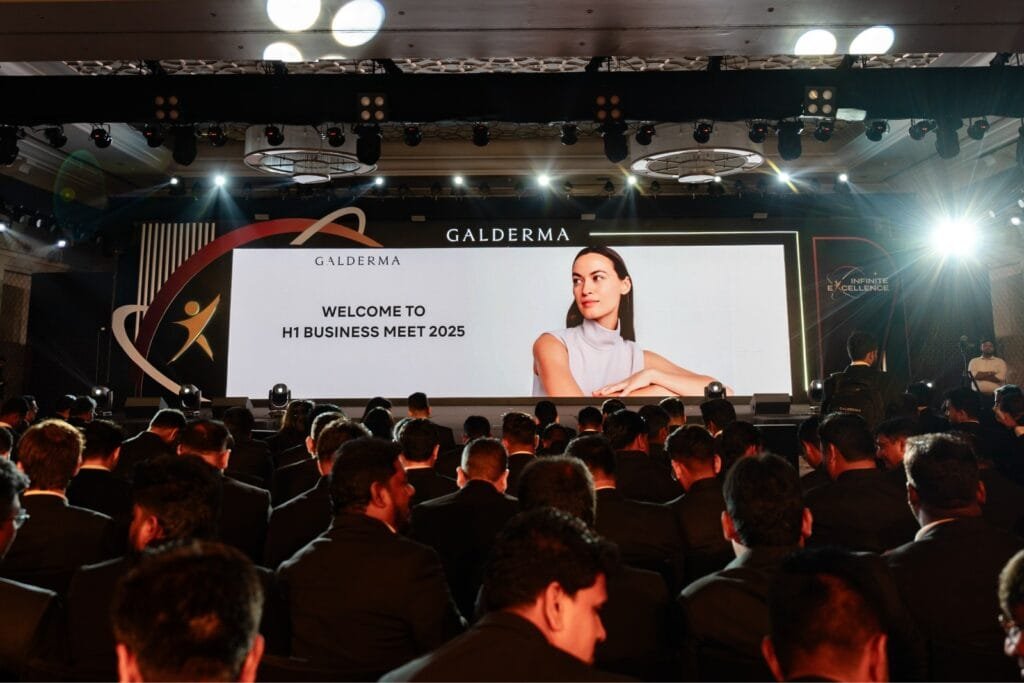
Pharma events have a communication problem that most photographers never solve.
The images come back looking perfectly fine. Delegates are smiling. The stage setup is sharp. The keynote speaker has decent light. But when the medical affairs team, brand manager, or corporate communications head sits down to actually use the photographs – for internal reports, medical publications, partner communications, or social media that still has to pass compliance review – something is missing. Or worse, something is there that shouldn’t be.
An unpublished efficacy slide captured mid-presentation during a scientific session that wasn’t cleared for photography. A product formulation visible on a display slide that wasn’t cleared for photography. A speaker who explicitly asked not to be photographed in informal settings, captured anyway because no one briefed the photographer. These are not hypothetical scenarios. They happen routinely when pharma companies hire generic event photographers who have no sector fluency.
India’s pharmaceutical industry is projected to reach US$ 120–130 billion by 2030, according to Bain & Co data cited by IBEF – making it one of the largest and most active pharma event markets in the world. From Delhi NCR and Gurgaon to Mumbai and Bengaluru, the volume of national congresses, CME conferences, product launches, and KOL engagement events has grown substantially. The photography and visual documentation of these events is no longer incidental. It is a regulated brand communication function in its own right.
The best corporate photographer for pharma events in India is not simply someone with strong technical skills. They are someone who understands that a pharmaceutical conference, a drug launch, or a continuing medical education programme is a carefully governed environment – and that the photographs produced in that environment carry the same responsibility as any other piece of regulated brand communication.
Here is what to look for before you commit.
1. What Documented Experience Should the Best Corporate Photographer for Pharma Events Actually Show?
This is the first question to ask, and the most clarifying.
Corporate event photography in India is a broad category that includes everything from annual general meetings and dealer conferences to school prize distributions and startup demo days. A photographer who covers “corporate events” may never have been inside a pharma congress, a hospital brand event, or a regulated product launch in Delhi NCR or Mumbai – and that absence of experience will show in how they approach your event.
What You Want to Hear
Direct experience with pharma or healthcare clients: pharmaceutical companies, medical device manufacturers, hospital groups, pharma associations, or allied industries like biotechnology and diagnostics.
Familiarity with event types specific to the sector: continuing medical education (CME) conferences, key opinion leader (KOL) roundtables, product launch events for branded or generic drugs, investigator meetings, scientific congresses, and company-sponsored symposia.
Experience working with regulated brands where content approval layers exist – where not every photograph can be used freely, and where brand safety is a live concern at every stage of the shoot.
Red flag: A photographer who says they cover “all kinds of corporate events” but cannot name a single pharma or healthcare client when asked directly. Sector experience in pharma is specific enough that a pharmaceutical conference photographer who has it will be able to describe it. One who doesn’t will pivot quickly to portfolio images that look similar but are from an entirely different context.
Real-world example: Dermacon 2025, the annual conference of the Indian Association of Dermatologists, Venereologists and Leprologists (IADVL), held at JECC Jaipur, brought together thousands of dermatologists from across the country. Covering that event required understanding the difference between a plenary keynote and a breakout CME session, knowing which product booths could be photographed and how, and producing imagery that would serve both association communication and the individual sponsors’ brand documentation – within a single, fast-moving event environment.
2. Does Your Pharma Event Photographer in Delhi NCR or Mumbai Understand Regulatory Sensitivity?
This question is almost never asked. It is arguably the most important one for anyone commissioning pharma event photography in India – whether for an event in Gurgaon, Mumbai, Hyderabad, or any other city.
Pharmaceutical marketing and communication in India operates within a regulatory framework. The Uniform Code for Pharmaceutical Marketing Practices (UCPMP), internal compliance guidelines, and event-specific content restrictions mean that certain visuals – product images, data slides, speaker statements, and specific session content – may not be cleared for photography or public use without explicit approvals.
A medical event photographer with no context for this environment will photograph everything that looks visually interesting. A photographer who understands pharma communication will know to ask.
What You Want to Hear
- Awareness that some sessions, presentations, or product materials may be off-limits for photography until cleared by the brand or medical affairs team.
- A practice of requesting a do-not-photograph (DNP) list or a restricted content brief before the event begins, rather than figuring it out reactively on the floor.
- Discretion in handling footage – understanding that a symposium room presenting unpublished clinical data is a different environment from a networking reception, and treating it accordingly.
- Familiarity with photography protocols around KOL speakers, who may have specific professional or contractual preferences about how their images are used.
Red flag: “I just photograph what’s in front of me” is a liability statement at a regulated event, not a reassurance. The right team will have had this conversation before. They will not be surprised by it.
3. Can the Best Corporate Photographer for Pharma Events Differentiate CME, KOL, and Launch Coverage?
Pharma events are not a monolithic category. The communication objectives, the audience, the environment, and the output requirements are substantially different across event types. A best-in-class corporate photographer for pharma events understands this and adjusts their approach accordingly – not just technically, but editorially.
CME and Scientific Conferences
The primary audience for images from a continuing medical education conference is professional. Delegates are peers. The tone needs to be credible, authoritative, and clean – not commercial. Images will likely be used in association publications, sponsor reports, and internal company communications. A pharmaceutical conference photographer who defaults to heavy post-processing, dramatic lighting, or consumer-event energy will produce images that feel tonally wrong for a medical professional audience, even if they look technically impressive.
KOL Roundtables and Investigator Meetings
These are smaller, more intimate events. Key opinion leaders and investigators are senior physicians who are often genuinely uncomfortable being photographed in a working discussion context. The best healthcare event photographers in these settings are the ones you barely notice – moving quietly, shooting without flash where possible, and producing images that reflect the substance of the conversation rather than performing a visual spectacle around it. Discretion is the primary technical requirement here.
Product and Brand Launch Events
Drug launch photography and medical device launch events carry more overt commercial energy. This is where production quality, staging, and editorial composition matter most. But even here, the pharma context shapes what works: imagery needs to serve both the immediate launch communication and the downstream brand documentation, and it has to do so in a way that is suitable for regulated industries where aspirational consumer aesthetics may be inappropriate.
What You Want to Hear
Ask the photographer: “How would you approach a KOL roundtable differently from a product launch?” A photographer with real pharma sector experience will answer this specifically and without hesitation. The differences they describe will reflect an understanding of audience, communication purpose, and environment – not just camera settings.
4. What Does a Qualified Pharmaceutical Conference Photographer's Pre-Event Process Look Like?
The event is one day. Pre-production determines the quality of everything that comes from it.
A corporate photographer for pharma events who shows up at a congress with a camera bag and a rough idea of the schedule is not prepared. Pharma events – particularly large national conferences, multi-day symposia, and multi-sponsor events in cities like Gurgaon, Mumbai, or Delhi NCR – have run-of-show documents, parallel session tracks, VIP protocol requirements, and exhibit hall logistics that need to be understood in advance, not navigated on the day.
What Strong Pre-Event Preparation Looks Like
- A pre-event briefing call or document review with your events, medical affairs, or brand team to understand the programme structure, priority sessions, key speakers, and any restricted content areas.
- A written shot brief or coverage plan – what must be covered, what is a priority, and what requires a specific kind of discretion or clearance.
- An advance understanding of the venue: ballroom lighting conditions, exhibit hall layout, breakout room sizes, and any areas with restricted access.
- Clarity on deliverable format from the outset: internal use only, post-event sponsor report, social media subject to compliance approval, or medical publication. Each end use changes what a good image looks like.
Red flag: A photographer who says they prefer to “feel the event on the day” and work intuitively. Intuition is a fine quality. It is not a substitute for preparation at a national pharma congress or a multi-sponsor symposium where certain moments cannot be repeated and certain content cannot be photographed after the fact.
5. Post-Production, Delivery Timelines, and Approval Workflows: What to Expect from Medical Event Photography
The event is over. The real test of the photographer is what comes next.
Pharma companies – whether headquartered in Mumbai, Gurgaon, or Delhi NCR often have multiple stakeholders in the content approval chain: the brand team, the medical affairs team, the agency, and sometimes a compliance or regulatory reviewer. Images going into any form of external communication – sponsor reports, press coverage, social media – may need to clear several of those layers before they can be used. A healthcare event photographer who delivers a raw gallery with no curation, inconsistent colour, and no understanding of this workflow creates friction at exactly the point where your team is already under time pressure from the post-event communication sprint.
What You Need to Know Before Delivery
- Curation before delivery: Are they delivering a curated selection of the strongest images, or a raw dump of everything shot? For pharma clients especially, a curated gallery reduces the internal review burden significantly.
- Colour grading and professional finishing: Event photography in pharma settings is often shot in challenging lighting. Consistent, professionally graded images that look like they belong to the same event are a baseline requirement, not an upgrade.
- Turnaround benchmarks: A curated post-event gallery of 200-250 images from a single-day conference should be deliverable within three to five business days for most professional agencies. Ask for a specific example from a comparable project, not a range.
- Multiple format delivery: High-resolution originals for print, web-optimised versions for digital use, and social-ready crops if required. Not all photographers think about downstream usage formats without being asked.
The question to ask directly: “Walk me through how you’ve handled delivery for a pharma client who had a compliance review process before any images could be shared.” A best-in-class corporate photographer for pharma events will have a specific answer. One who hasn’t will describe a generic gallery delivery process and leave the compliance piece to you.
Summary
The best corporate photographer for pharma events in India is not necessarily the most technically gifted photographer in the market. They are the one who combines technical capability with genuine sector fluency – an understanding of the regulatory environment, the audience, the communication objectives, and the operational realities of pharmaceutical events across Delhi NCR, Gurgaon, Mumbai, and beyond.
Here are the five things to verify before you book:
- Documented pharma sector experience – not just “corporate events,” but specifically pharma or healthcare clients and event formats you recognise.
- Regulatory and content sensitivity awareness – they know what to ask about, what to restrict, and why.
- Event-type differentiation – they approach a KOL roundtable, a CME congress, and a product launch as distinct briefs, not variations on the same job.
- A structured pre-event process – briefings, shot lists, venue advance, and a clear understanding of your deliverables before the day begins.
- Professional post-production and delivery – curated, consistently graded, and structured to work within your content approval process, not around it.
A photographer who answers all five of these well – with specifics, not generalities – is likely the right partner for your next pharma event.
Work With a Team That Understands Pharma
CandidShutters Media has worked with some of India’s most demanding corporate and institutional clients – including pharmaceutical companies, medical associations, and healthcare brands across pan-India events, from Gurgaon and Delhi NCR to Mumbai. From national dermatology congresses and pharma product launches to KOL roundtables and multi-day MICE events, the work is built around one principle: your images should be as precise and purposeful as the event they document.
If you are planning a pharma conference, a CME event, a KOL engagement, or a medical product launch and want to speak with a team that has genuinely navigated this environment before, we’d be glad to hear about your brief.
FAQ
1. What makes a corporate photographer suitable for pharma events specifically?
Beyond technical photography skill, the best corporate photographer for pharma events needs to understand the regulatory environment, content restrictions specific to pharmaceutical communication, the professional audience these images are created for, and the multi-stakeholder approval process that often governs how pharmaceutical event photography is used. Sector fluency – knowing the difference between a CME conference and a product launch, for example – is a meaningful variable in the quality of the output.
2. Can a general corporate event photographer cover a pharma conference?
Technically, yes. In practice, the risks are meaningful: unrestricted photography of regulated content, images that are tonally wrong for a professional medical audience, no pre-event briefing process for restricted areas, and a post-production and delivery workflow that does not account for compliance review. For lower-stakes internal events, the gap may be manageable. For conferences involving sponsors, KOL speakers, or any external communication, sector-specific experience in pharma event photography in India is worth the additional diligence in vendor selection.
3. What is a reasonable delivery timeline for pharma event photography in India?
For a curated gallery of 100–150 images from a single-day pharma conference or symposium, five to seven business days is a professional benchmark for an agency with proper post-production workflow. Multi-day congress coverage or events with product display documentation may take longer depending on scope. Always agree on specific timelines before the event, particularly if your images need to clear a compliance or content approval process before use.
4. Which cities in India host the most pharma events?
Delhi NCR – including Gurgaon and Noida – along with Mumbai, Bengaluru, and Hyderabad account for the majority of large-format pharmaceutical conferences, CME events, and product launches in India. A medical event photographer or pharmaceutical conference photographer with active experience across these markets will have the venue familiarity and logistical understanding to operate efficiently in any of them.

CandidShutters Media
Corporate Photography & Video Production Agency · Mumbai & Gurgaon · Est. 2012 · 14+ Years
International : Dubai · Sri Lanka · Malaysia · Thailand · Maldives · Worldwide