Industrial Video Production: The New Operating Language of Global Manufacturing
Industrial Video Production is no longer a marketing add-on.
Industrial Video Production is now a core business tool for manufacturing, infrastructure, EV, electronics, and engineering brands. From factory walkthroughs and process documentation to ESG proof and investor communication, industrial video production is shaping how modern companies build trust, scale globally, and win high-value contracts. If your operations are world-class but your storytelling is not, you are invisible.

Industrial video production is now a business necessity, not a creative luxury
Industrial video production focuses on high-precision visual content for manufacturing, EV, infrastructure, and heavy industry. Unlike traditional advertising, these assets prioritize operational clarity and technical accuracy.
As we enter 2026, the data confirms that video is the primary driver of B2B industrial growth:
- The 93% Benchmark: 93% of marketers now report strong ROI from video—the highest level ever recorded.
- Short-Form Dominance: 81% of B2B decision-makers prefer short-form video to learn about complex product insights.
- The Trust Factor: 91% of stakeholders state that video quality directly impacts their trust in a brand’s technical capability.
Modern factories, EV plants, and automated warehouses are complex ecosystems. Text documents and legacy PDFs no longer communicate scale or precision. Decision-makers want to see real operations, real machines, and real execution.
That is where industrial video production has become the operating language of global manufacturing.
What is Industrial Video Production
Industrial video production is the creation of high-quality visual documentation and storytelling tailored specifically for industrial environments. These videos are designed to communicate complex technical processes in a simple, structured, and visually credible format.
A Strategic Asset for Every Department
In 2026, video is no longer a “marketing expense”—it is a foundational business tool used across the entire organization:
- CEOs & Founders: To communicate long-term vision and ESG (Environmental, Social, and Governance) transparency to investors. Visualizing facility scale and “Smart Factory” integration is now the gold standard for securing capital.
- CMOs & Brand Leaders: To build Market Authority. With 89% of B2B buyers stating that video quality directly impacts their trust in a brand’s technical capability, high-end production is a prerequisite for credibility.
- Operations & HR Heads: To reduce EBITDA leakage caused by training gaps. Video-based learning increases knowledge retention by up to 60%, accelerating onboarding and reducing on-floor accidents.
- Sales & Revenue Teams: To shorten enterprise buying cycles. 87% of B2B marketers report that video has directly increased sales by providing the “Visual Proof” required to close high-stakes tenders.
- Compliance & Safety Teams: To automate SOP documentation for ISO audits. High-definition visual records ensure that every safety protocol is documented, repeatable, and audit-ready.
Unlike conventional marketing films, industrial video is built for accuracy, continuity, and long-term business value.
Common Types of Industrial Videos Used by Global Leaders
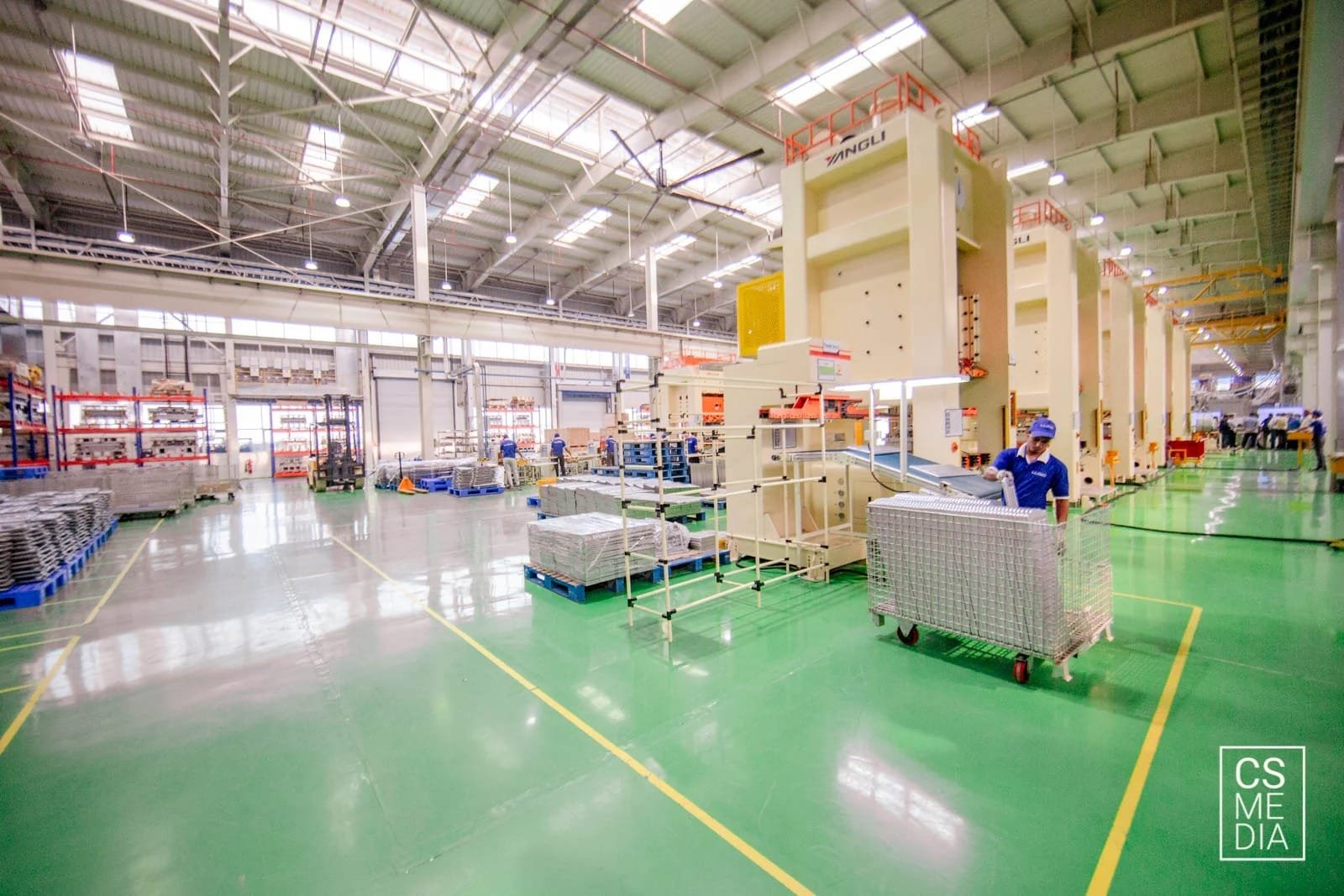
Factory Walkthroughs
Immersive tours using ground-level and aerial drone footage to showcase facility scale, automation, and infrastructure. These are widely used for investor roadshows, global sales, recruitment, and government tenders.
Real-world example:
Xiaomi released an extensive “Inside the Factory” video series (2024–2025) for its Beijing EV plant, showcasing high-speed automated production and precision engineering to build trust in its new automotive line.
Process Documentation
Step-by-step visual documentation of manufacturing lines, assembly processes, and quality control systems. Often enhanced with time-lapse, close-ups, and technical callouts.
Used for:
- Training
- Compliance
- Knowledge transfer
- ISO and audit documentation
Safety and Training Films
Compliance-focused videos covering SOPs, hazard prevention, emergency protocols, and machine handling.
These reduce on-floor errors, accidents, and onboarding time while creating a consistent training standard across locations.
Corporate Profile Films
High-level industrial storytelling that communicates a company’s legacy, values, engineering depth, and innovation capability.
Real-world example:
AWS and Microsoft released immersive data centre films in 2025 to demonstrate the massive scale of their cloud infrastructure and sustainability operations.
Product Demonstrations
Technical videos showing how a machine, component, or system functions. These often include graphic overlays, specifications, and real-world use cases.
Real-world example:
Toyota used live demo videos (2024–2025) to introduce complex mobility devices for people with disabilities, focusing on real-world functionality and engineering precision.
The Current Industrial Video Production Workflow
Modern industrial video production follows a highly structured four-stage execution model.
1. Pre-Production
- Facility and risk assessments
- Scriptwriting with engineering teams
- Safety protocol planning
- Shot planning for live environments
- Compliance approvals
This stage ensures filming does not interrupt production or compromise safety.
2. Production
Filming takes place inside active industrial environments using:
- PPE-compliant crews
- 4K and 8K cinema cameras
- Industrial drones
- Thermal and ruggedized cameras
Production is designed to capture real operations without disrupting output.
3. Post-Production
Raw footage is transformed into structured business assets using:
- Technical text callouts
- Motion graphics and 3D overlays
- Voiceovers and multilingual versions
- Modular edits for different platforms
4. Distribution and ROI Analysis
Videos are deployed across:
- Company websites
- LinkedIn and B2B platforms
- Sales presentations
- Trade shows
- Investor decks
Performance is tracked against:
- Lead generation
- Conversion rates
- Training effectiveness
- Support query reduction
Specialized Equipment and Techniques Powering Industrial Video
Aerial Videography
Industrial drones capture panoramic 4K and 8K views of manufacturing plants, ports, refineries, solar farms, and logistics hubs.
Industrial Cameras
Used in chemical plants, mining, and heavy engineering:
- Explosion-proof cameras
- Thermal cameras
- Low-light inspection cameras
These enable process monitoring in extreme environments.
Graphic Overlays and Motion Data
Text supers, animated schematics, and motion data layers simplify complex mechanical and electrical systems for non-technical stakeholders.
Specialized Optics
Using explosion-proof and low-light inspection cameras for hazardous environments.
Agentic AI Integration
Utilizing AI for localized voiceovers and automated asset search, saving up to 70% on localization costs.
Strategic Business Benefits of Industrial Video Production
Thought Leadership and Market Authority
Consistent industrial storytelling positions manufacturers as category leaders rather than commodity suppliers.
Knowledge Retention and Training Efficiency
Viewers retain approximately 95 percent of a message through video compared to 10 percent through text. This makes video the most effective format for technical training and compliance.
Lead Generation and Sales Enablement
Industrial buyers demand proof. Video provides visual validation of capability, scale, and execution.
85 percent of people report being convinced to buy a product or service after watching a brand video.
Reduced Support and Operational Costs
57 percent of video marketers report that tutorials and training videos directly reduce support queries.
In manufacturing, AR-augmented video has cut assembly time by 15 percent for companies like Airbus and reduced visual inspection errors by 40 percent at Boeing.
Why Industrial Video Production is Exploding Across Global Manufacturing
Industrial video production transitioned from a marketing expense to an operational investment.
- 91 percent of businesses now use video as a primary marketing tool.
- 93 percent of marketers consider video a dominant part of their strategy.
- 82 percent report a positive ROI from video.
Manufacturing leaders in EVs, electronics, semiconductors, green energy, and robotics are now building internal video libraries as digital infrastructure.
Industrial video is now used as:
- A sales asset
- A training system
- A compliance framework
- An investor communication platform
- A recruitment engine
The Current Industry Trends Defining Industrial Video
AI-Driven Personalisation
Companies now build one production backbone and deploy localized versions in multiple languages using AI-powered workflows.
Short-Form for B2B
30 to 60 second vertical clips are now used for:
- Recruitment
- Executive insights
- Trade show marketing
- Product explainers
Immersive Storytelling
360-degree tours, AR overlays, and advanced drone cinematography are now core for explaining scale and complexity.
Authentic Engineering Stories
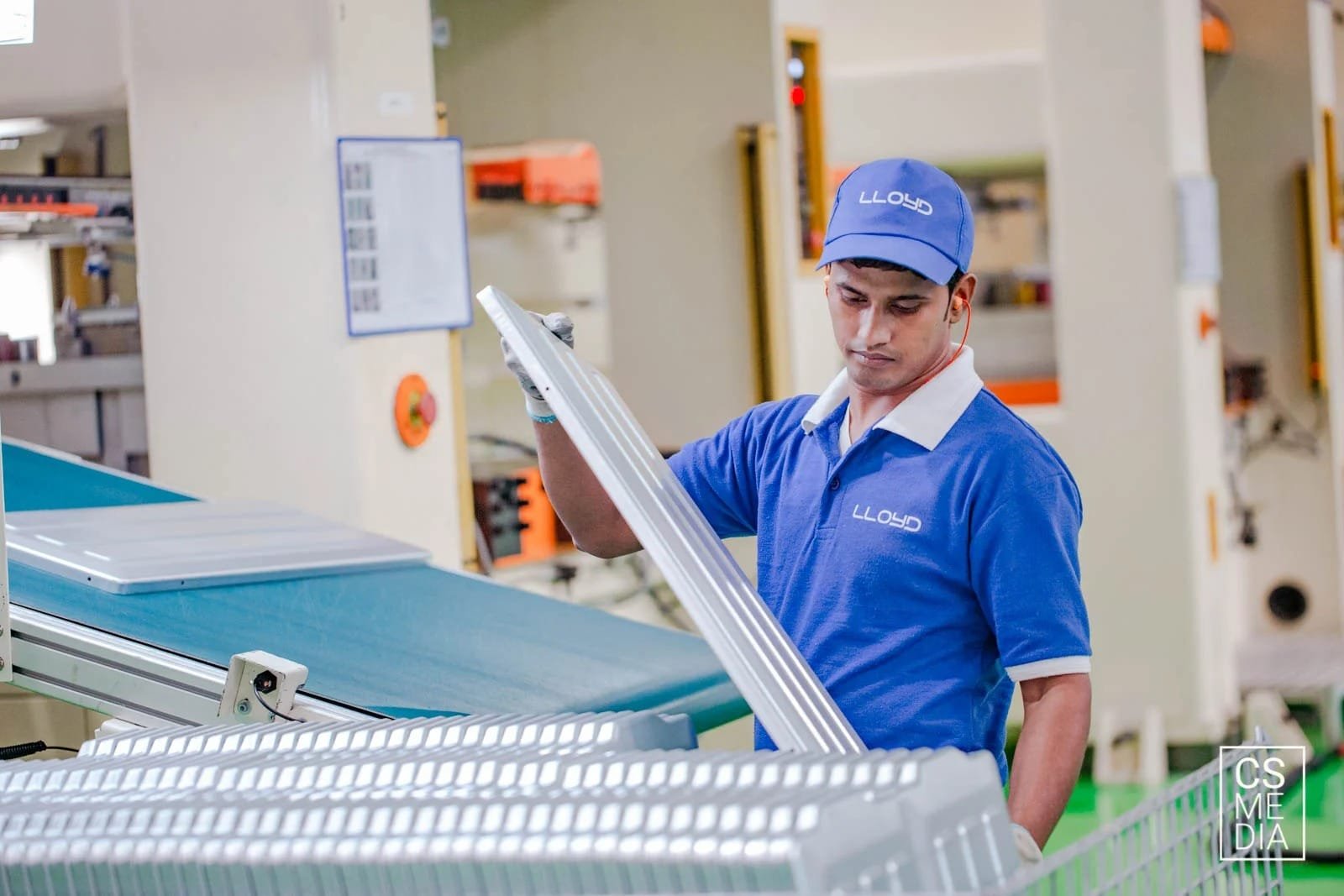
Brands are moving away from actors and scripted scenes. Real engineers, technicians, and operators are now the face of industrial credibility.
Summary: Why Industrial Video Production is Now a Boardroom Decision
Industrial video production has become a strategic business infrastructure for modern manufacturing.
- It builds trust at scale.
- It shortens enterprise buying cycles.
- It improves training outcomes.
- It reduces operational friction.
- It strengthens investor confidence.
In a world driven by automation, data, and precision, the companies that win are the ones that show their execution, not just talk about it.
Industrial video is no longer about visibility.
It is about credibility.
If your operations are world-class, your storytelling should be too.
CandidShutters Media helps manufacturing, infrastructure, EV, and engineering leaders build industrial video systems that communicate scale, precision, and performance with authority.
Talk to CandidShutters Media about building your industrial video production ecosystem for now and beyond.
Frequently Asked Questions on Industrial Video Production
What are the dominant industrial video trends in 2026?
The industry follows a two-speed strategy. Short-form vertical clips for reach and long-form anchor films for trust. Authentic storytelling using real engineers and real facilities has become the credibility standard.
How widespread is video adoption in manufacturing?
91 percent of businesses now use video as a marketing tool. 95 percent consider video a core business strategy component.
Is AI now part of industrial video workflows?
Yes. In 2026, over 63 percent of video marketers use AI for scripting, voiceovers, localisation, and automated editing.
What kind of ROI can industrial companies expect?
82 percent of marketers report strong ROI from video. Businesses using AI-driven video workflows report up to 82 percent higher ROI than traditional methods.
Does industrial video directly impact sales?
Yes. 84 percent of businesses report increased sales from video marketing. 85 percent of buyers say video influenced their purchase decision.
How long does a typical industrial video project take?
Simple modular videos can be produced in days. High-end corporate and factory films typically require several weeks of planning, filming, and post-production.
Who owns the rights to the footage?
In most professional contracts, the client owns full rights to the final video once payment is completed. Some studios also provide raw footage on request.
Who are the global leaders using industrial video?
Microsoft, Amazon, Shell, Xiaomi, Toyota, Nike, AWS, SPIE Batignolles, and major EV and robotics manufacturers are actively using industrial storytelling to showcase automation, sustainability, and infrastructure.
How does video impact safety and training?
Video training has been shown to reduce visual inspection errors by up to 40% in high-precision environments like aerospace and electronics.
Industrial video production is now the language of modern manufacturing.
The companies that master it will define the next decade of industrial leadership.
Last updated on March 8th, 2026 at 07:23 pm

CandidShutters Media
Corporate Photography & Video Production Agency · Mumbai & Gurgaon · Est. 2012 · 14+ Years
International : Dubai · Sri Lanka · Malaysia · Thailand · Maldives · Worldwide